© Wanderyarns
Andrássy út (UNESCO World Heritage)
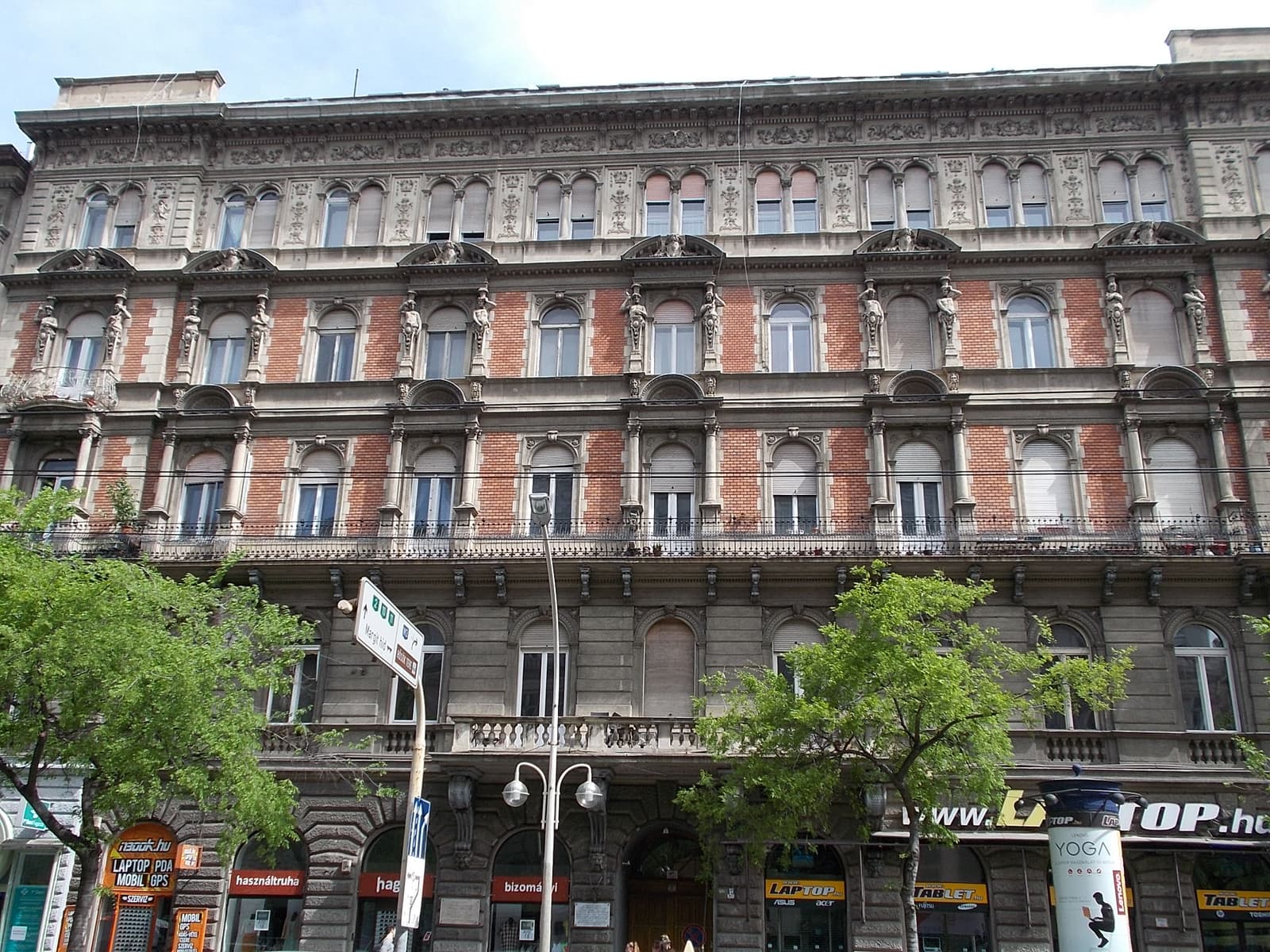
Step onto Andrássy út, Budapest's most magnificent boulevard, and instantly feel the grandeur of a bygone era. A proud UNESCO World Heritage site since 2002, this architectural marvel, built between 1872 and 1876, was originally known as Sugárút – the 'Radial Avenue.' As you stroll beneath its leafy canopies, past Neo-Renaissance palaces and elegant townhouses, you can almost hear the echoes of history whispering through the opulent facades of this vibrant city center. Beyond its obvious splendor, Andrássy út invites you to discover the true heart of the Hungarian capital. This isn't just a main thoroughfare; it's a living museum, having borne witness to, and reflected, monumental shifts in Hungarian history, visible in its past names: Sztálin út (1949), Magyar Ifjúság útja (1956), and Népköztársaság útja (1957).
Street Name Changes Obscure Oktogon's Architecture
around the regime change (circa 1990)
During the regime change, the central intersection around Oktogon underwent rapid renamings, transforming "November 7 Square" into "Oktogon," "Népköztársaság útja" into "Andrássy út," and splitting "Lenin körút" into "Teréz körút" and "Erzsébet körút," which also involved house number changes. This complex shift meant that a single address could refer to vastly different locations depending on the era, complicating property management. The newly formed local government, recognizing Oktogon's distinctive four-building architectural character, sought documents for "Oktogon 1, 2, 3, and 4." They were puzzled to find records for buildings 1, 3, and 4, but nothing for "Oktogon 2," believing a crucial document was missing. The reality was that due to the street name changes, the building they identified as "Oktogon 2" was actually listed as "Andrássy út 49." This radical re-addressing scheme directly obscured the administrative identity of one of Oktogon's unique architectural ensemble, causing significant confusion about its documentation.
Sources: Nagykörút
The Grand Boulevard's Role in Budapest's World City Transformation
Late 19th to early 20th century
The Grand Boulevard was crucial to Budapest's transformation into a global city, evolving from what was once considered a peripheral area. Despite initial undeveloped plots, rapid construction within just 13 years saw large, modern buildings fill every available space, creating a grand urban aesthetic. This project also brought significant infrastructural improvements; its deep design enabled an impressive sewage system that enhanced public health. Furthermore, efficient tram transport integrated new districts and spurred rapid development in surrounding neighborhoods. Contemporaries explicitly recognized the Grand Boulevard, alongside Andrássy Avenue, as fundamental to Budapest's development into a world city, collectively propelling the city towards its global aspirations.
Sources: Nagykörút
Why Budapest has grand avenues instead of a canal system
Mid-to-late 19th Century
Budapest features grand avenues like Andrássy út instead of a canal system because an ambitious canal plan by Ferenc Reitter faced insurmountable obstacles. The project became economically unfeasible due to prohibitively high expropriation costs for developed land along its proposed route. Public health concerns also arose from the plan to fill existing ditches with waste. Strong public and media opposition, notably from the "Pesri Napló," deemed a costly canal "unnecessary" and "uncivilized," instead advocating for "public gardens, parks, and wide boulevards" as markers of a modern capital. This shift in public attention coincided with Prime Minister Gyula Andrássy's vision to transform Pest into a metropolis, inspired by European capitals. Under his leadership, a Beautification Committee was formed, which laid the groundwork for the very urban developments—wide boulevards and new bridges—that ultimately replaced the canal vision.
Sources: Nagykörút
Stroll Budapest's grandest boulevard, a UNESCO gem, and unlock centuries of Hungarian history and hidden delights.
What to Look For
- The opulent Neo-Renaissance palaces and elegant townhouses along the main avenue.
- The lush, leafy canopies that create a picturesque tunnel effect.
- Plaques or signs indicating its past historical names (e.g., Sztálin út).
- Entrances to charming side streets leading to hidden courtyards and cafes.
- Architectural details reflecting the grandeur of the late 19th century.
💡 Insider Tip
Don't just stick to the main avenue. Duck into the side streets or through grand archways; many lead to tranquil courtyards, secret gardens, or charming, less crowded cafes perfect for an authentic Hungarian coffee break.
Photos