1956 Revolution Walk

Moderate2h 30m12 stops3.5 km

Walk in the footsteps of the 1956 Hungarian Revolution — from the first shots at Magyar Rádió to the heroic defense of Corvin köz. A powerful journey through Budapest's most dramatic modern chapter.

On 23 October 1956 a student march in Budapest turned into a revolution, and for almost two weeks the city fought for its freedom. This walk follows those days from the Buda side, where the first crowds gathered, across the river to the passages and barracks of Pest, where young workers and students held out against Soviet tanks. It ends at the Technical University, where the students had written down their demands the day before it all began.
Start Scavenger Hunt

1956 Revolution Walk Scavenger Hunt — solve riddles as you explore!

Route Map

Loading map…

Points of Interest

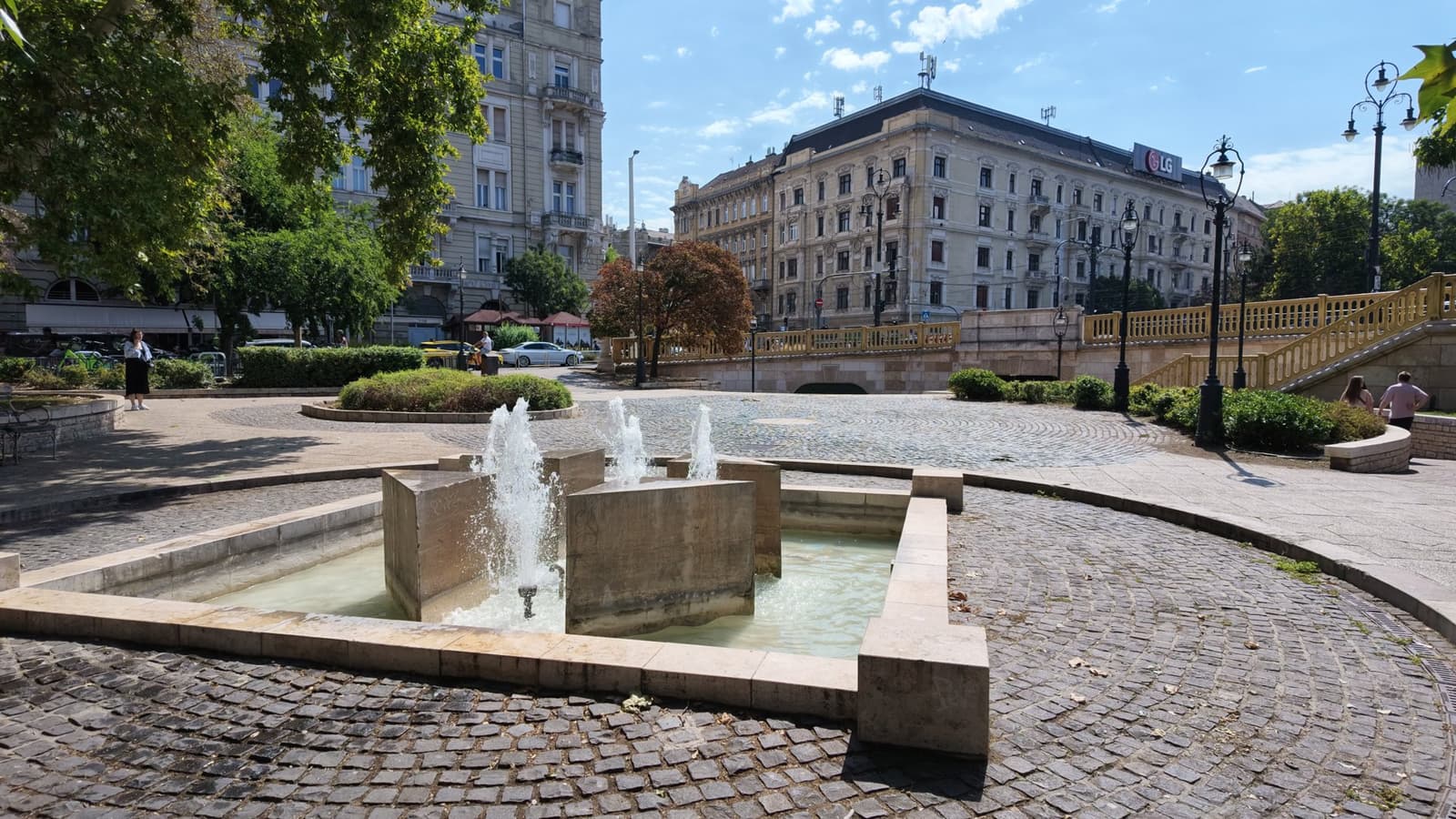
  1. Photo of Széna tér

    © Wanderyarns

    1956 Revolution Walk · Stop 1

    Széna tér

    In 1956 the Buda side had its own Corvin köz: a few hundred workers and apprentices held this crossroads against Soviet tanks.

    The story

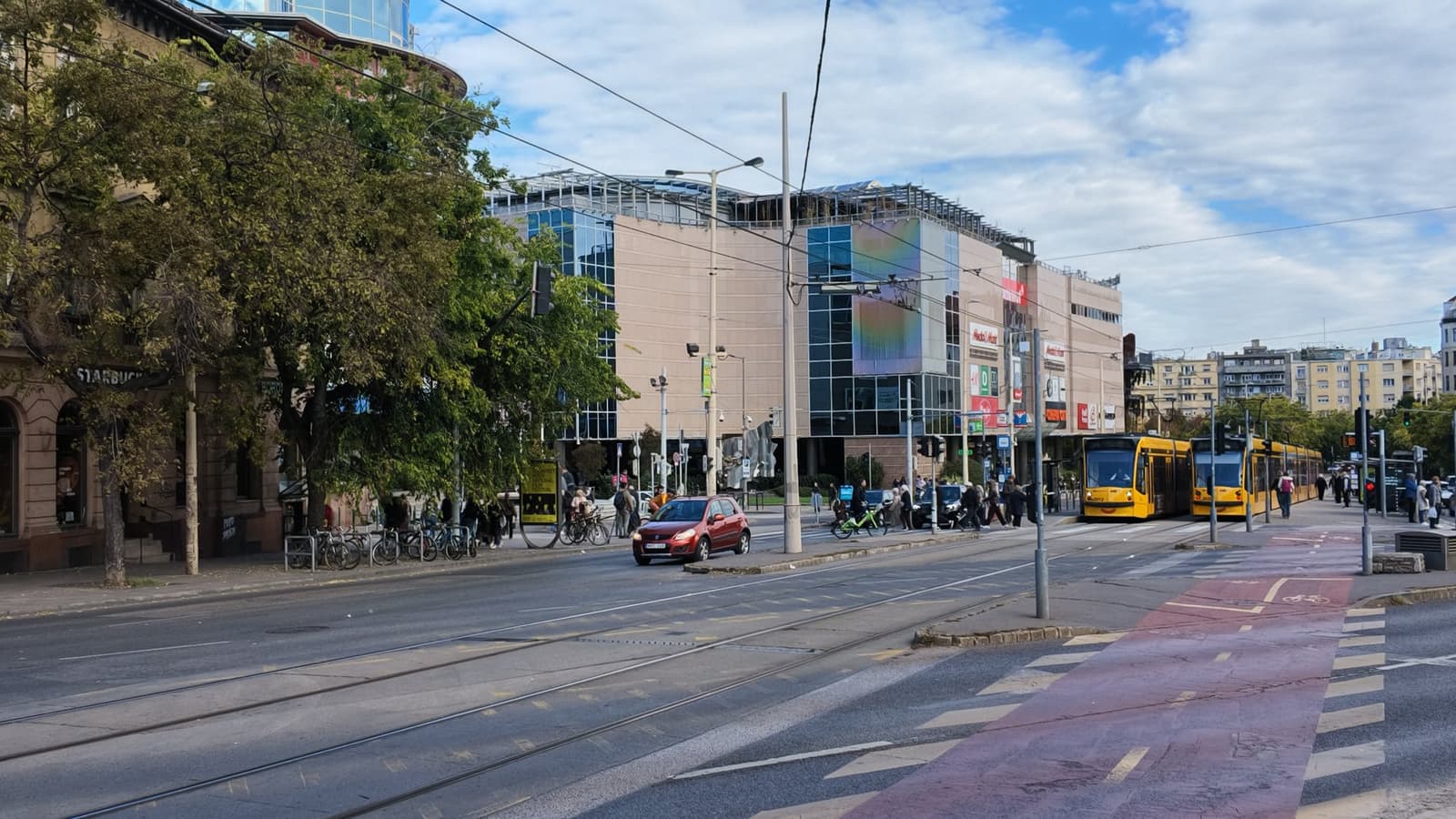
    A busy square at the foot of the Buda hills, next to Széll Kálmán tér and the Mammut shopping centre. Its name means "Hay Square", after the hay market once held here. A memorial at the corner of the Mammut II building remembers the armed group that fought here in 1956.

    Széna tér is really an extension of Széll Kálmán tér (called Moszkva tér in 1956), one of Buda's busiest junctions: whoever wanted to hold the north-west of the city had to hold this ground. The armed group of Széna tér formed on 25 October 1956. It was never tied to one building. It held the State Security barracks on Maros utca, and its fighters ranged from Margit híd to the Southern Railway Station. Its size is still argued: one leader claimed 2,000, while historian László Eörsi counts about 300, which still makes it the second-largest armed civilian group after Corvin köz. Most were Buda workers and apprentices. An American journalist saw them on 28 October behind overturned trams, under fire from Soviet tanks. When the Soviet army returned on 4 November the group dispersed. Its best-known commander, "Szabó bácsi", 59 years old and the oldest commander of the uprising, was sentenced by a secret military court in January 1957 and was among the first to be executed for 1956.

    What do you want here?

    • Free to see from outside

    Next stop · 2 of 12

    Bem József tér

    980 m · about 13 min on foot

    On the way to Bem József tér

    Uncle Szabó, and the march to Bem

    Before you go, stop at the memorial in front of the Mammut II building on Lövőház utca: a torn steel flag with carved wooden posts. Further along Lövőház utca, a plaque at no. 15 remembers "Szabó bácsi" ("Uncle Szabó"), the grey-haired lorry driver who commanded the Széna tér fighters. He was executed in 1957. Then walk downhill towards the Danube. On 23 October 1956 a crowd of students marched this way to the statue of General Bem, the Polish hero of Hungary's 1848–49 war, to show solidarity with Poland.

  2. Photo of Bem József tér

    © Wanderyarns

    1956 Revolution Walk · Stop 2

    Bem József tér

    On the afternoon of 23 October 1956 a student march stopped at this statue, and by evening it had become a revolution.

    • 13 min from stop 1

    The storyswipe · 2 cards

    A riverside square on the Buda bank, below Castle Hill. Its centre is the bronze statue of General József Bem (1934), who commanded Hungarian troops in Transylvania in the 1848–49 war of independence.

    Before

    Why a Polish general

    Józef Bem was a Polish general who fought for Hungary in 1848–49; troops under his command freed almost all of Transylvania in three months, and he won a high place in the national pantheon. He was not the only Pole: 3,000 Polish volunteers fought under Józef Wysocki. In October 1956 Hungarians were watching Poland. On 19 October Khrushchev flew to Warsaw to intervene, but had to accept the reformer Władysław Gomułka as party leader, and the Soviet troops went back to barracks. The news filled Hungarian papers on 23 October. 'Follow the Polish example' became the slogan, and a march to Bem's statue was its logical expression.

    Big moments

    23 October, afternoon

    Two marches converged on the statue, one from the Technical University along the Buda embankment, one from the Petőfi statue in Pest. Workers and office staff joined them on the way. 'Polish and Hungarian want the same!' and 'Russians go home!' they chanted. It was an unusually warm day. The writer Péter Veres spoke, though hardly anyone could hear him over the noise and singing; the anthem kept breaking out. The demonstration was peaceful: no violence, no shots. When it ended, as the British eyewitness Dora Scarlett wrote, nobody wanted to go home. Across the river, the Interior Ministry and secret-police headquarters watched the crowd cross the Margaret Bridge towards Parliament.

    People heretap for more

    Also here

    • Külügyminisztérium (Bem rakpart)

      Hungary's Ministry of Foreign Affairs, on the river side of Bem tér.

    What do you want here?

    • Free to see from outside

    Next stop · 3 of 12

    Fő utcai börtön (Military Prison)

    470 m · about 7 min on foot

    On the way to Fő utcai börtön (Military Prison)

    The secret trial on Fő utca

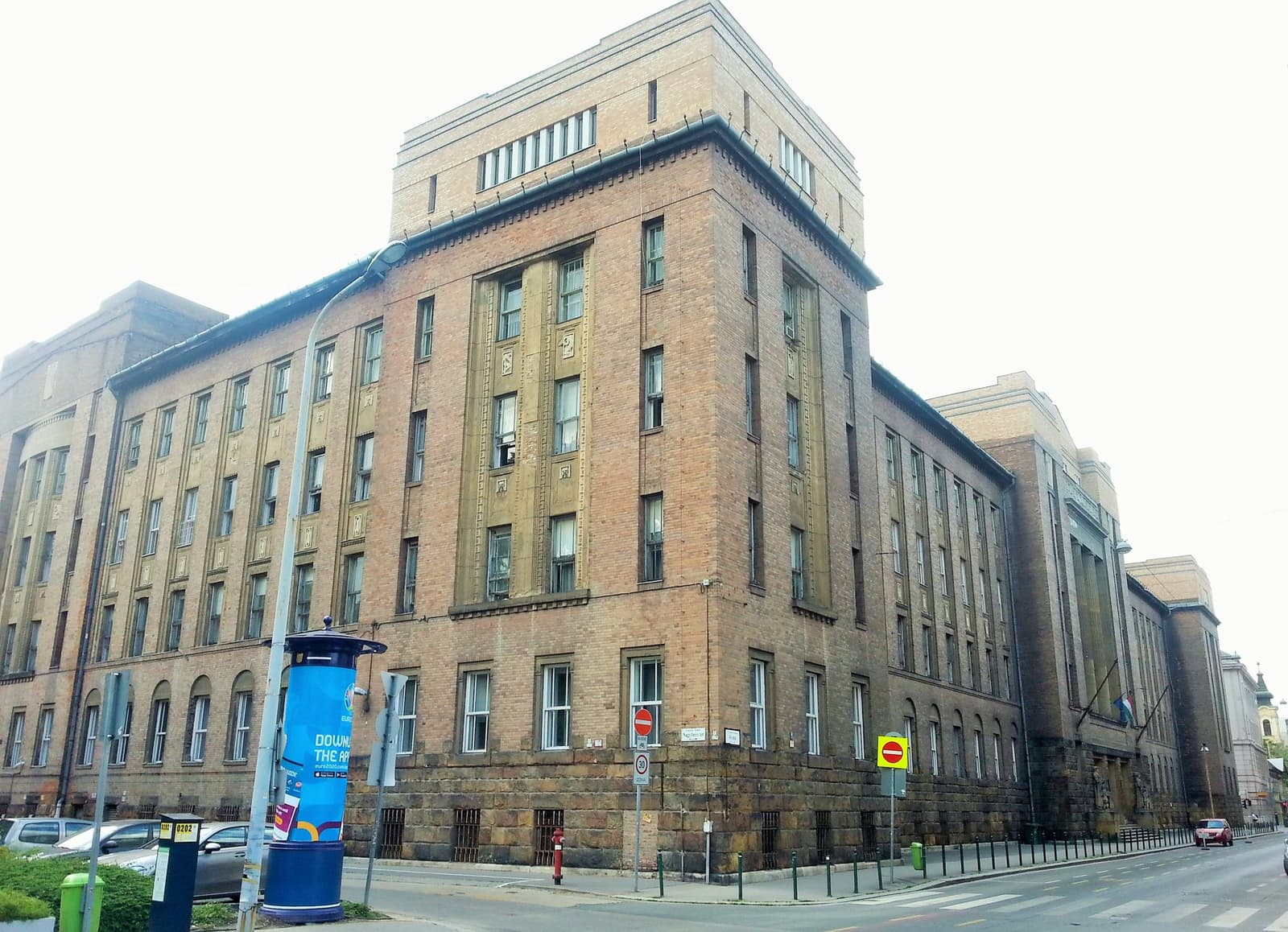
    Walk south along Bem rakpart, past the Foreign Ministry on the river side. Your next stop looks like an ordinary office block on Fő utca. It housed the military prosecutor's office and prison. In June 1958, Imre Nagy and his fellow defendants were tried here in secret and sentenced to death.

  3. Photo of Fő utcai börtön (Military Prison)

    © 12akd · CC BY-SA 4.0

    1956 Revolution Walk · Stop 3

    Fő utcai börtön (Military Prison)

    Uncover a raw, unfiltered chapter of Budapest's revolutionary past at this unassuming military prison.

    • 7 min from stop 2

    The story

    Fő utcai börtön, located on Fő utca in Budapest's historic Víziváros district, was a formidable military prison. It witnessed the imprisonment of political figures, dramatic liberations during revolutions, and in a poignant twist, later became a stronghold for the same revolutionaries. It offers a profound glimpse into a compelling, yet often overlooked, segment of Budapest's history.

    Step back in time to discover one of the most compelling, yet often overlooked, chapters of Budapest's past. Tucked away on Fő utca in the historic Víziváros district, the unassuming façade of the Fő utcai börtön, once a formidable military prison, belies a powerful narrative. This is truly one of the <b>hidden Budapest</b> gems, an experience for those seeking <b>off the beaten path Budapest</b> adventures.

    Imagine the heavy silence that once permeated these cold, stone walls, where political prisoners languished, their hopes tethered to whispers and shadows. Then, picture the dramatic upheaval of the revolution: the clamor of the streets outside, the surge of determined crowds, and the momentous liberation as inmates were dramatically freed from their confines. Yet, history, ever cyclical, saw its fate turn once more. In a poignant twist, this very building later became a stronghold for those same revolutionary fighters, now captured themselves. Visiting this site offers a profound glimpse into a raw, unfiltered segment of <b>Budapest's history</b>, making it one of the essential <b>secret spots Budapest</b> has to offer. Feel the weight of its legacy and uncover a story that reverberates through the quiet, cobblestone streets of Víziváros.

    Also here

    • Photo of Batthyány tér & Fehér Kereszt© Wanderyarns
      Batthyány tér & Fehér Kereszt

      Uncover Roman history, Casanova's secret tales, and Parliament views at Buda's Batthyány tér.

    What do you want here?

    • Free to see from outside
  4. 9 more stops · unlock the tour €4.99

    The full story, the insider tip, the people and the riddle come with the tour.

Stop 1 of 12