© Wanderyarn
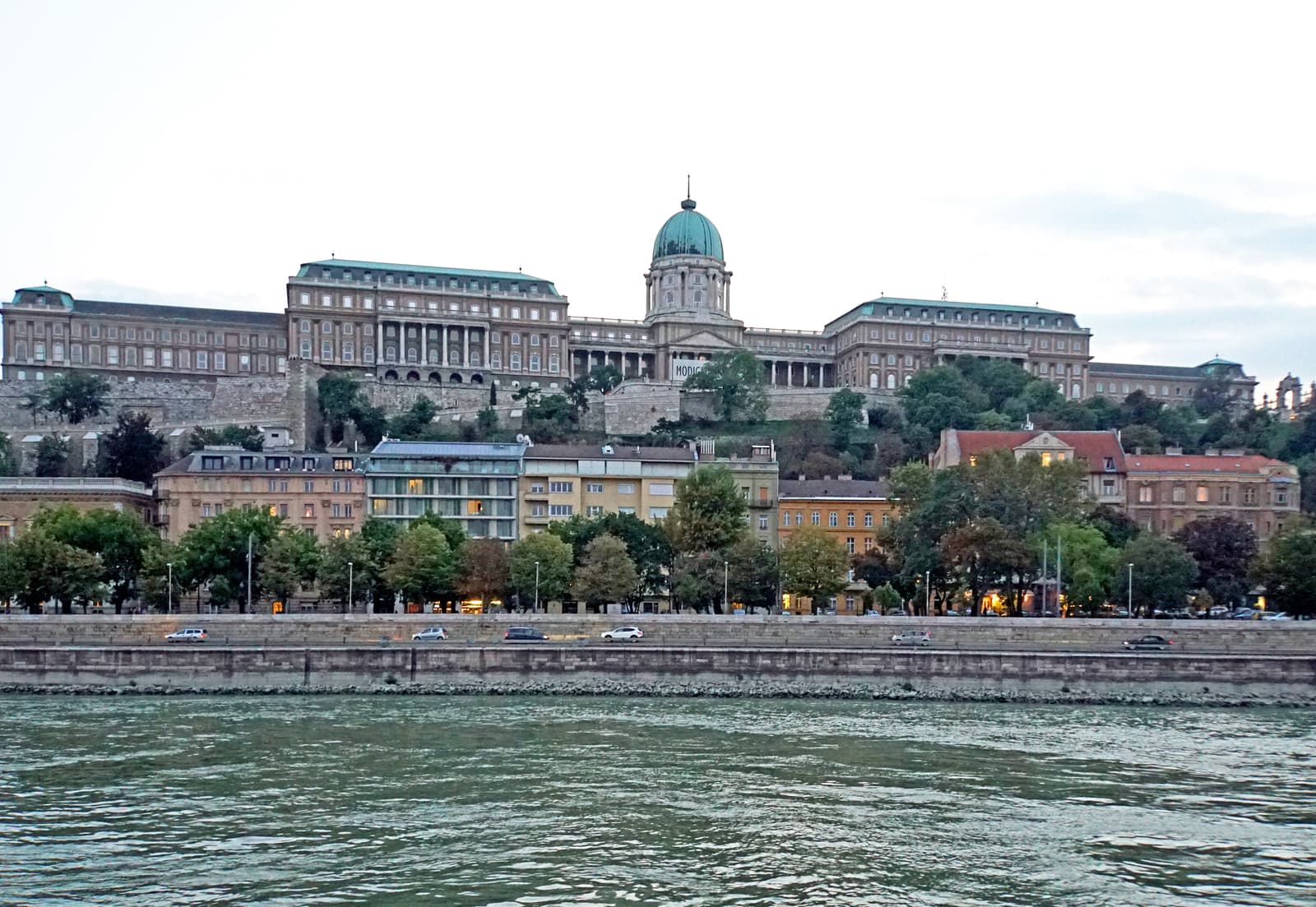
Budavári Palota (Royal Palace)
Imagine the sheer resilience after the devastating Mongol invasion, as King Béla IV laid the very foundations of this grand complex, a powerful symbol of rebirth. Its golden age truly blossomed under the illustrious King Matthias, transforming the palace into a vibrant Renaissance beacon of culture and power. As you explore the grand courtyards and intricate facades of this iconic structure in the Buda Castle District, can you almost hear the elegant melodies of Haydn echoing through its opulent halls? Picture the dazzling, almost frantic, court life orchestrated by Empress Alexandra Pavlovna, a society so vibrant it demanded the palace's very expansion.
The Establishment and Role of Buda Castle's Rector
13th-14th Century
King Béla IV established the position of 'Rector' in Buda Castle in the autumn of 1264, a direct response to the severe political instability dividing Hungary. With the Danube serving as a border between Béla IV and his son Stephen V, Buda became a critical border fortress. To secure the castle during his absence for his younger son's wedding in Austria, King Béla IV appointed Henry Preussel as the first Rector. This externally appointed role initially functioned as a powerful castle captain and chief judge, replacing the previously elected city head, and also served as the steward of the queen's, and later the royal, court. While the Rector's role evolved by the early 14th century to primarily denote the steward of the royal house, its establishment ensured strong royal authority and security in a vital fortress during internal conflict.
Sources: Pest-Buda kialakulása (1997)
Budavár's Earliest Royal Connection: King Péter's Vision
11th century
Saint Stephen, Hungary's first king, was pivotal in founding the Hungarian Christian state and its ecclesiastical structure, establishing the basilica in Székesfehérvár and a "closed church organization." Although some accounts incorrectly attribute the founding of the Buda chapter to him, the earliest royal connection to the area, then called Budavár or Buda, originated with King Péter. Péter, who received the kingship from Saint Stephen before Stephen's death, began constructing a church dedicated to Saint Peter in Bazoar, identified as the Budavár prebendary. King Péter aimed to make Óbuda (Budavár) a more permanent royal seat, alongside Pécs, bypassing Esztergom and Székesfehérvár. He was attracted by its ancient Roman ruins, which he recognized as a "civitas" with urban development potential. Because Saint Stephen had left a "closed church organization," Péter could not establish a bishopric. Instead, he founded a prebendary within this civitas, establishing an ecclesiastical body there. This act marked Budavár's earliest royal connection and its initial designation as a potential royal capital.
Sources: Pest-Buda kialakulása (1997)
What to Look For
- The grand courtyards and intricate facades that reflect various architectural styles.
- The panoramic views of Budapest and the Danube from the palace terraces.
- Statues and monuments, including the Matthias Fountain and the Turul bird.
- The various museums housed within the palace complex, such as the Hungarian National Gallery and the Budapest History Museum.
- Remnants of earlier fortifications and architectural layers from different eras.
Photos