© Wanderyarns
Buda Castle & Royal Quarter · Stop 1
Déli rondella
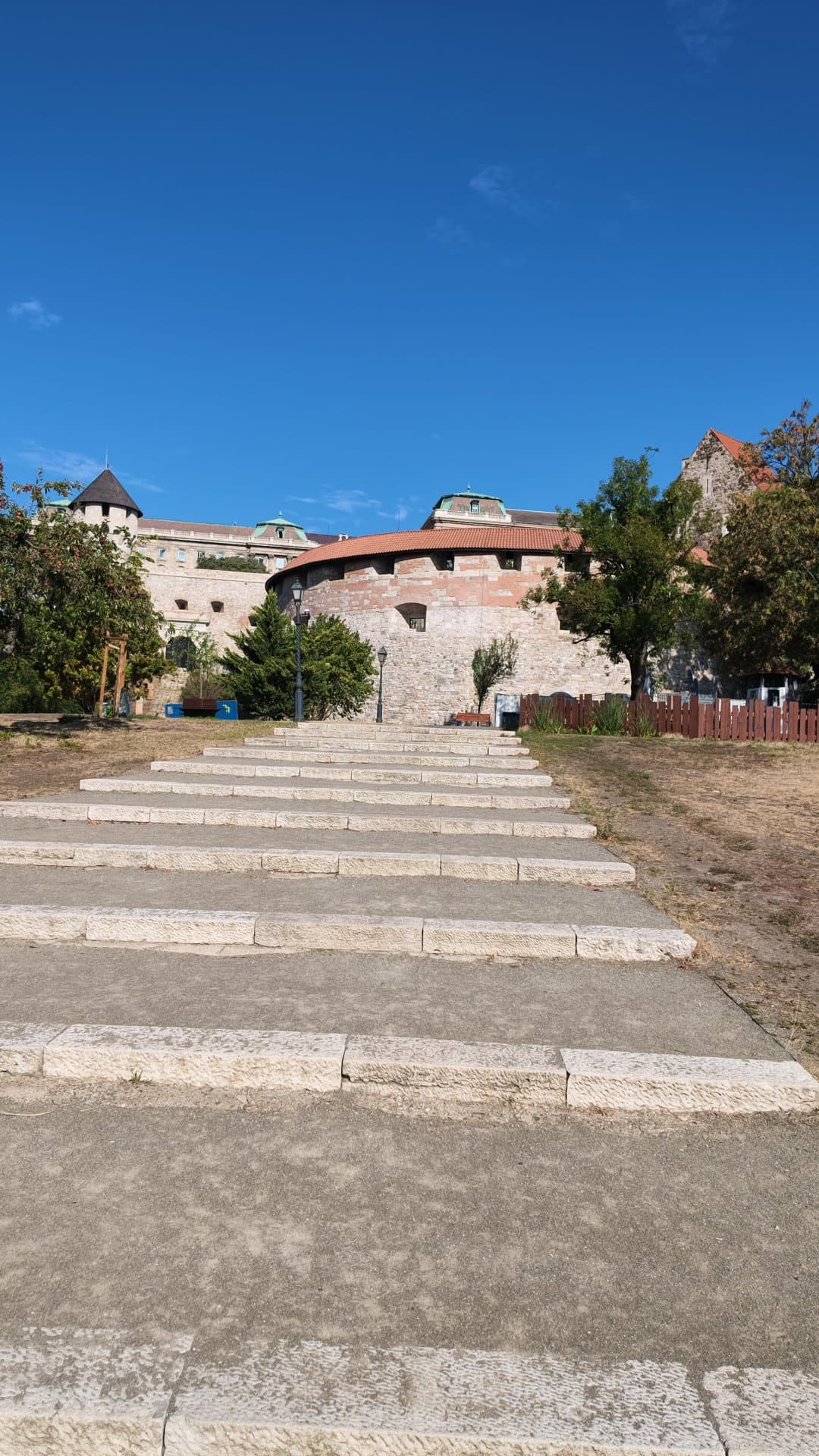
A round gun bastion from the 1530s, built to answer cannon fire from Gellért Hill across the valley.
The story
The Déli Nagyrondella (Great Southern Rondella) is a round artillery bastion at the southern tip of Castle Hill, below the south end of the Royal Palace. It was built between 1530 and 1541, in the reign of King John Szapolyai, in place of an older triangular outwork. What you see today was rebuilt in the post-war reconstruction completed in 1966.
A bastion built for cannon
In the 1530s, under King John Szapolyai, Buda needed walls that could stand up to artillery. A great round bastion replaced the old triangular outwork at the palace's south end; its thick walls were filled with earth to absorb fire from Gellért Hill. The 1686 siege wrecked it.
What you see was rebuilt in the post-war reconstruction finished in 1966, from excavations and old views — a method critics say went against the rules of historic reconstruction.
What do you want here?
Our pickRestaurant
Hungarian restaurant down in the Tabán, below the castle walls; a downhill walk from the rondella.
11 min walk€€
Navigate me thereAlso good here
- VakVarjú VarjúVárRestaurant · 3 min walk
Next stop · 2 of 12
Várkert Bazár
250 m · about 4 min on foot
On the way to Várkert Bazár
A castle that guarded the river
Buda's defenders watched the Danube as closely as the hills. In the Middle Ages a wall ran from the castle down to the river bank, with a covered firing gallery, stone benches and a stair tower in the middle that led down to the water. At its southern end stood a round water bastion. In 1530 it was called the 'water castle', and 22 royal river warships were stationed there. A network of casemates, probably finished under King John Szapolyai, linked the water bastion with the great southern rondella, so soldiers could move between the river and the castle under cover. The river side mattered in every siege. In 1541 the defenders broke out from the water bastion and set fire to the camp the besiegers had abandoned. In a later siege a thick iron chain was stretched across the Danube between Buda and Pest to stop warships passing, and a German officer rowed down carefully in a small boat to scout it.