© Wanderyarns
Tram 2: The Most Beautiful Tramline · Stop 1
Jászai Mari tér
Tram 2's northern end: the Pest foot of Margaret Bridge, where Újlipótváros begins.
The story
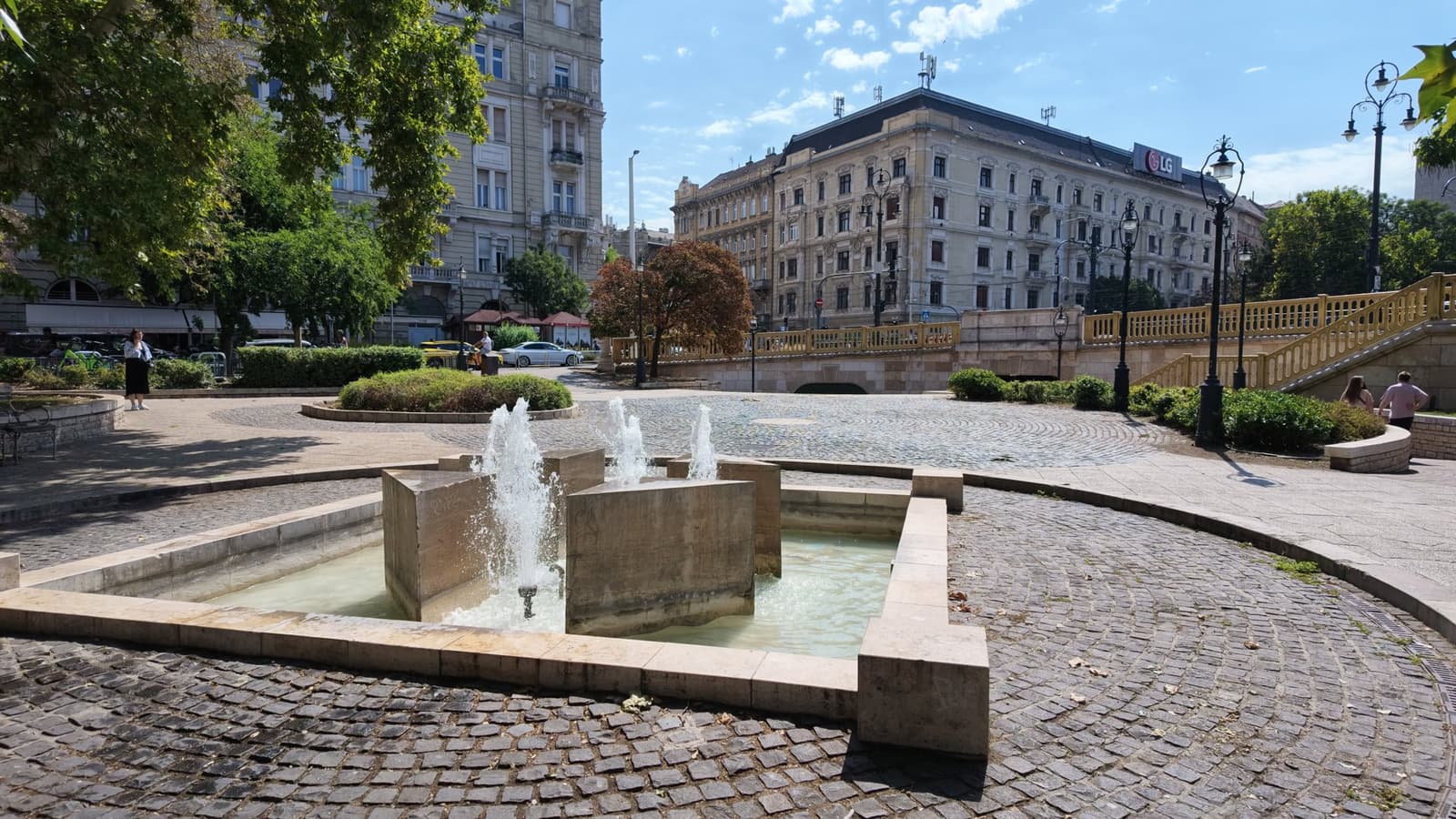
Two tree-lined squares on either side of the Pest end of Margaret Bridge, where Lipótváros meets Újlipótváros. The square is named after the actress Mari Jászai (1850–1926), who lived in the Palatinus Houses opposite from 1914 until her death. Tram 2 and the Grand Boulevard trams stop here.
PREVIEW
Where the inner city ends
Two small squares sit either side of the ramp of Margaret Bridge, and they mark a border. South of here is Lipótváros, the district of Parliament and ministries. North is Újlipótváros, built almost all at once between the late 1920s and 1944 as a modern quarter for the middle class, with flat-fronted apartment blocks, balconies and roof terraces, and some of the best modernist architecture in Hungary. The square is named after Mari Jászai (1850–1926), the great tragic actress of the National Theatre, who lived in the Palatinus Houses on the embankment from 1914 until her death. Look around before you set off. On a small bronze footbridge stands Imre Nagy, prime minister during the 1956 revolution. On the riverbank at the bridgehead is the memorial to the Hableány, the sightseeing boat that sank under the bridge in May 2019. Tram 2 starts its run along the river here, and the Grand Boulevard trams cross the square on their way over the bridge.
1 more story with the tour
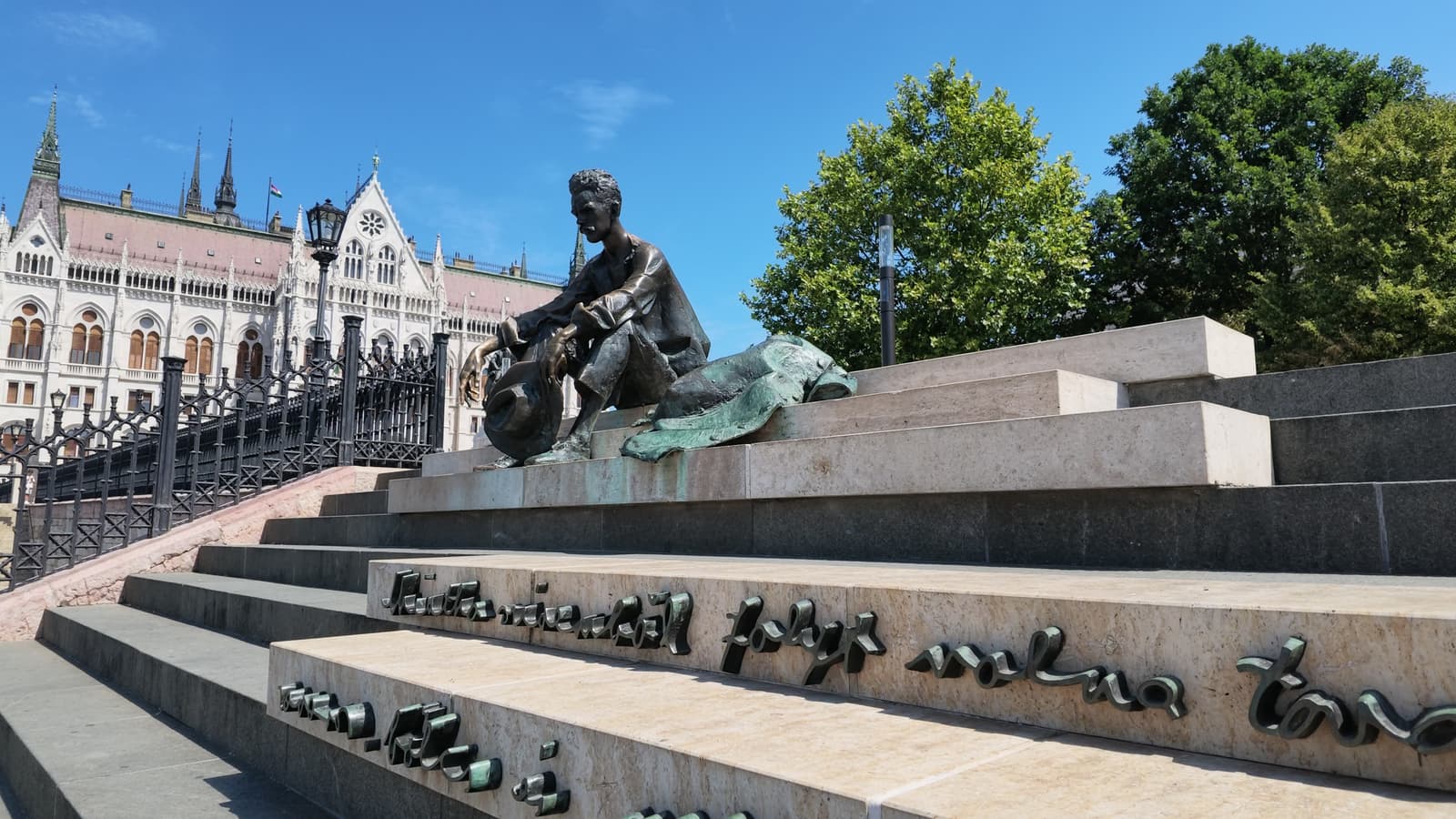
- The actress and the poet
Also hereswipe for more
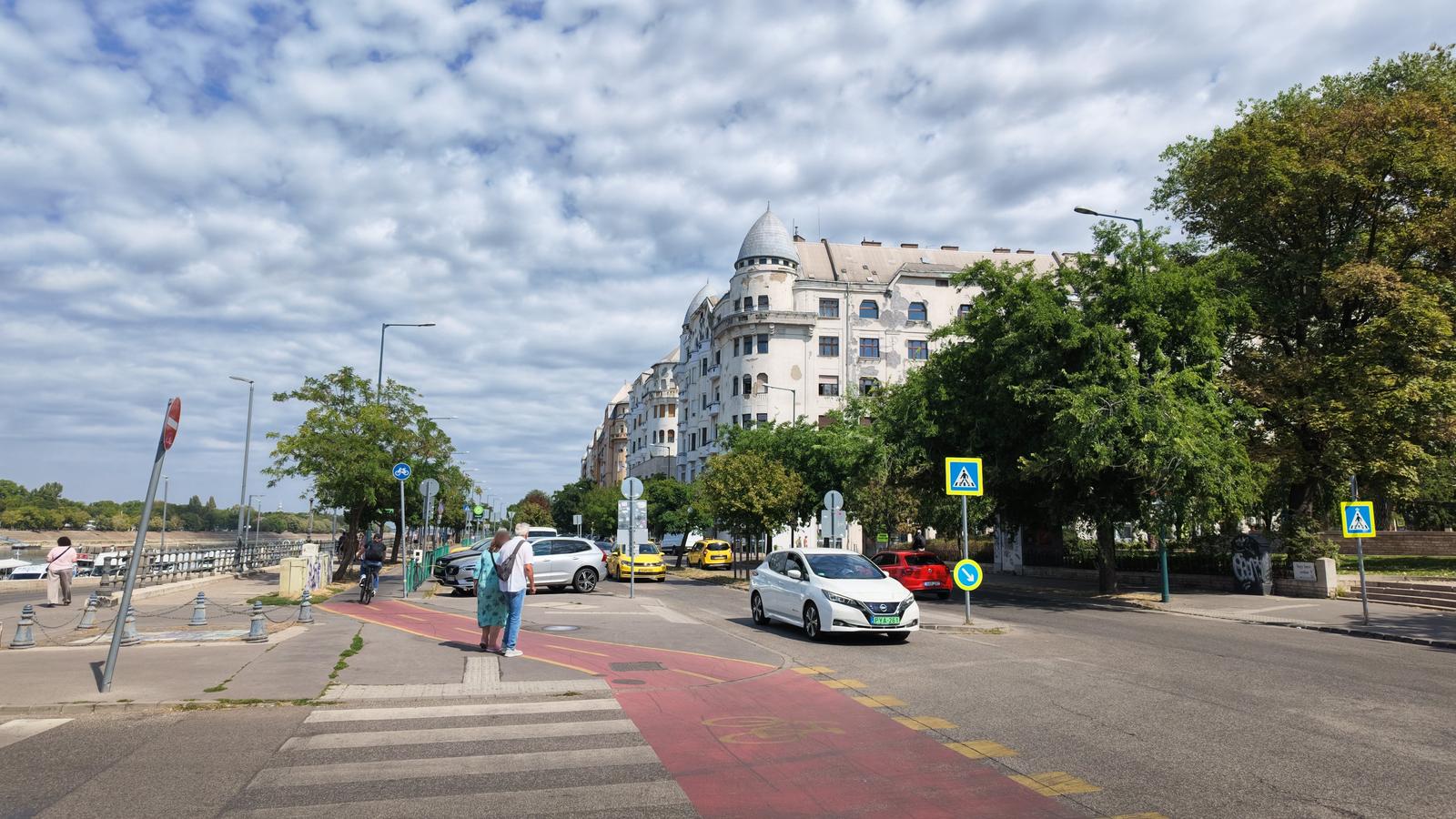 © WanderyarnsPalatinus Houses (Pozsonyi út)
A row of apartment palaces on the embankment, built in 1911–12, where the actress Mari Jászai lived for the last twelve years of her life.
Get there © WanderyarnsRadnóti-botlatókő (Pozsonyi út 1)
His widow, Fanni Gyarmati, lived on in their flat here until her death in 2014 and never took down his name.
Get there © WanderyarnsNagy Imre-szobor (Jászai Mari tér)
Unveiled in 1996, the centenary of his birth, the bronze honours the 1956 prime minister hanged in 1958 after Soviet tanks crushed the revolution.
Get there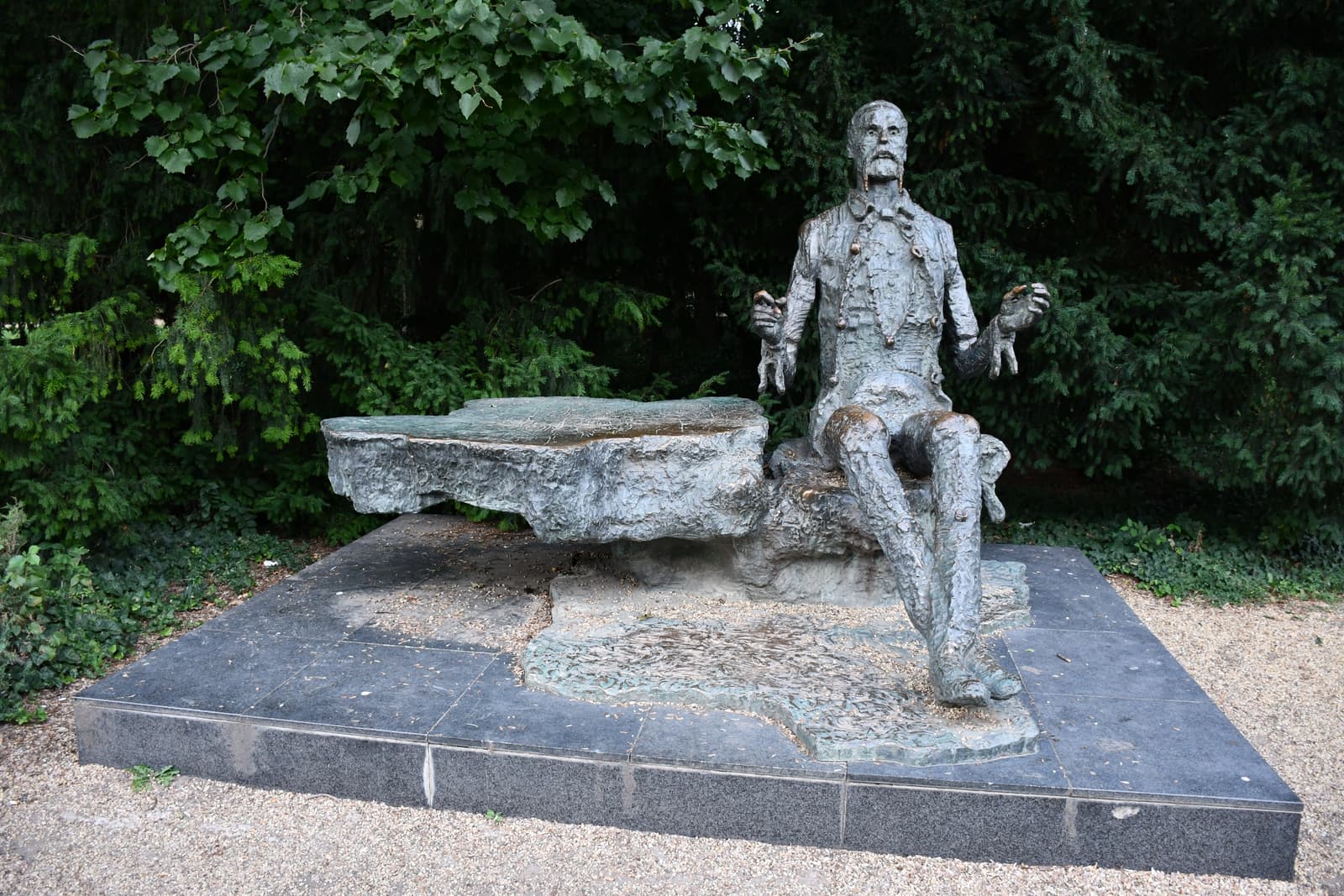 © Ato 01 · CC BY-SAMargaret Island (Margitsziget)
An island park in the Danube between Buda and Pest, reached from the bend of Margaret Bridge.
Get there © WanderyarnsMargit híd (Margaret Bridge)
The bent French bridge to Margaret Island, blown up by accident in 1944 with a tram on it.
Get there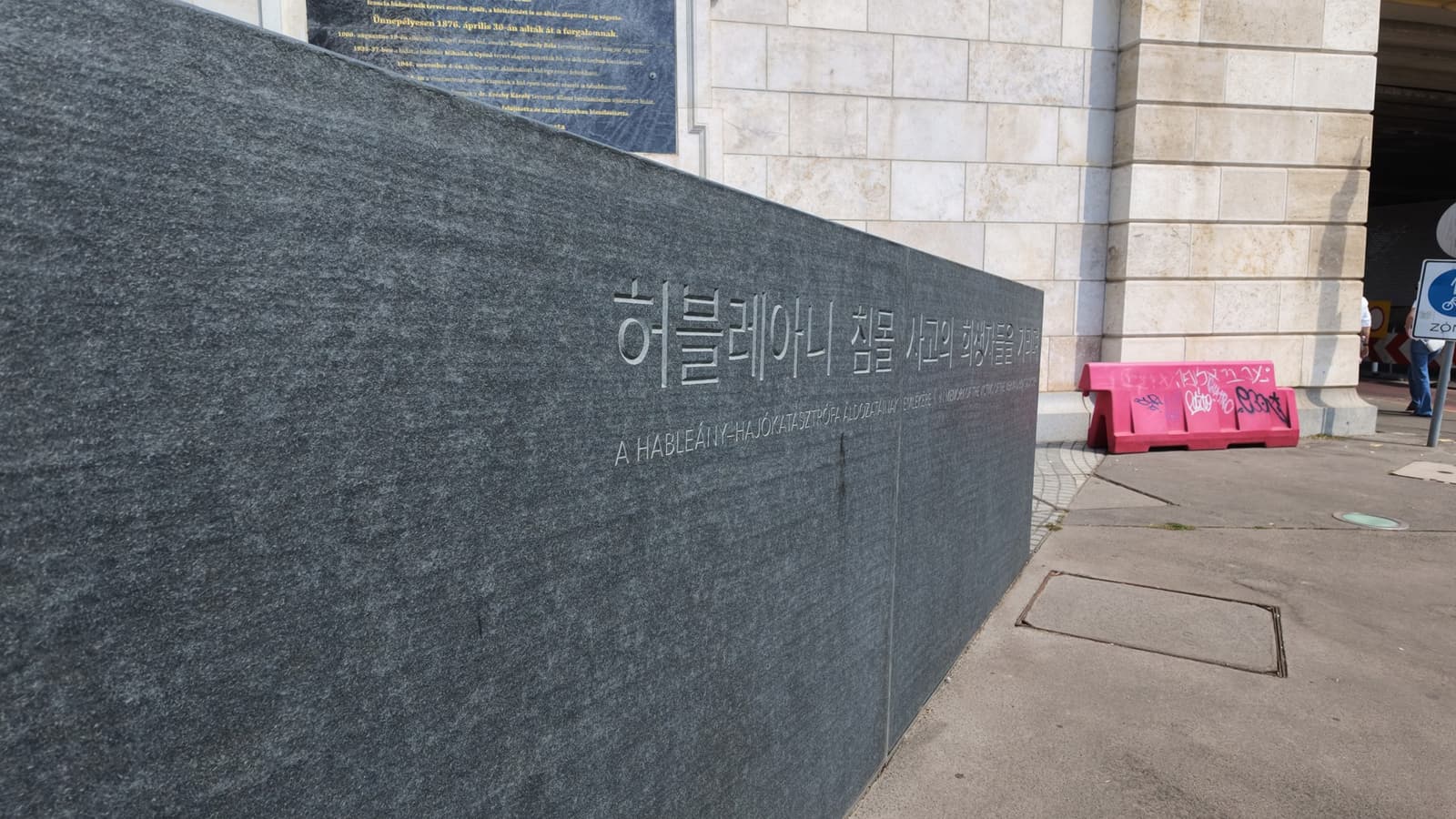 © WanderyarnsHableány-emlékmű (Margit híd, pesti hídfő)
A long granite block by the river carries the names of the people who died when a sightseeing boat sank here in 2019.
Get there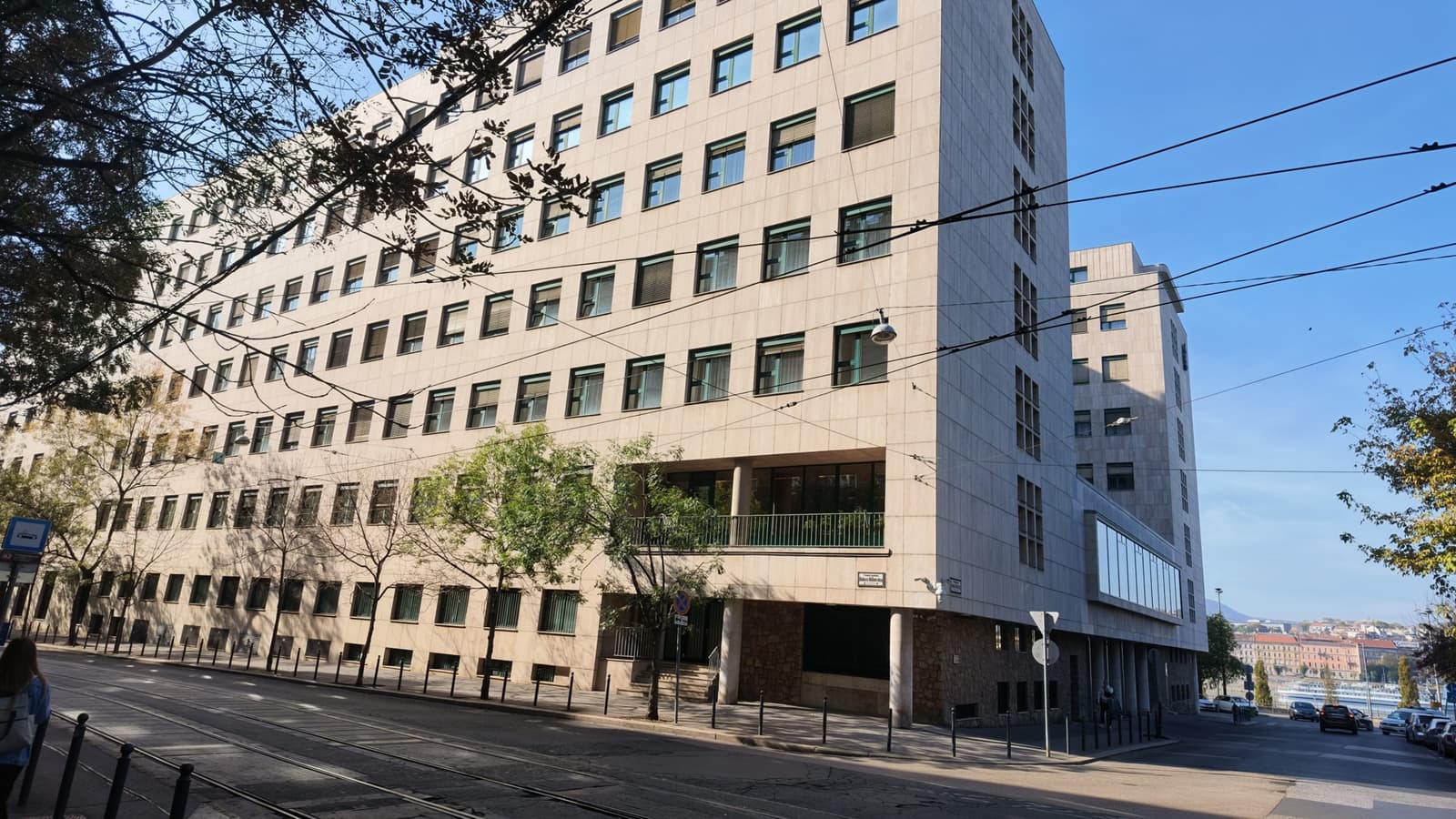 © WanderyarnsFehér Ház (Országgyűlés Irodaháza)
Built in 1913–14 as flats, burnt out in the siege, stripped into a plain office block in 1949; later the Communist Party's headquarters, the 'White House'.
Get there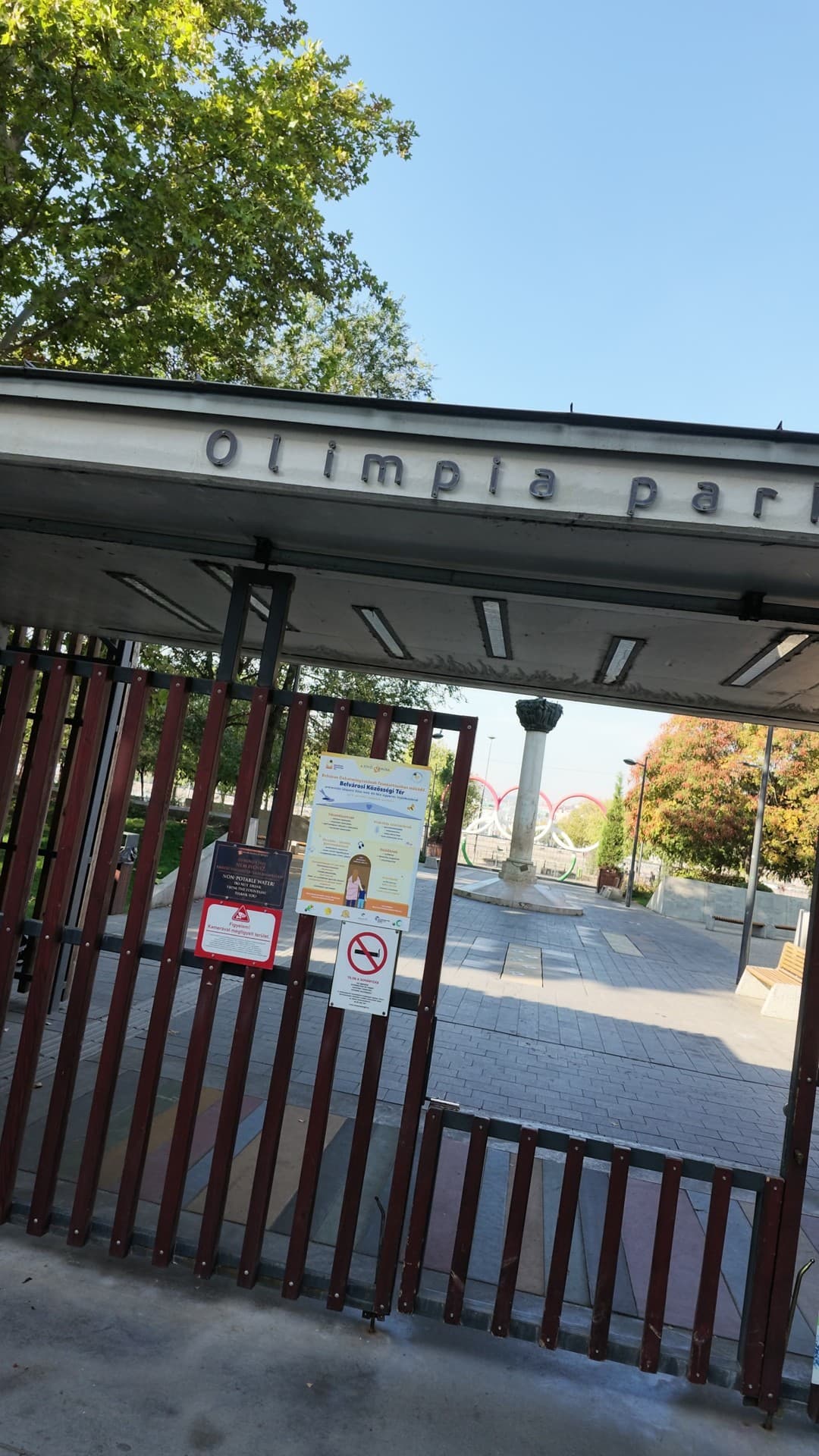 © WanderyarnsOlimpia Park
A riverside park with Olympic rings in red, white and green.
Get there
What do you want here?
- Open to look at from outside
Our pickBar
Jazz club on Hollán Ernő utca, 4 minutes from the square; check its programme for evening concerts.
4 min walk€€
Navigate me thereAlso good here
- Forni di NapoliRestaurant · 3 min walk
- gangsikdangRestaurant · 3 min walk
More nearby
- Csevapivo | Kafana Balkan Grill & BeerRestaurant · 5 min walkNavigate me there
- Ohana - the coffee familyCafé · 3 min walkNavigate me there
- Tökmag Vegan Street FoodRestaurant · 3 min walkNavigate me there
Next stop · 2 of 8
Hungarian Parliament
770 m · about 10 min on foot
Or ride
- Tram 2Jászai Mari tér → Kossuth Lajos tér M2 stops3 min
On the way to Hungarian Parliament
A prime minister on a footbridge
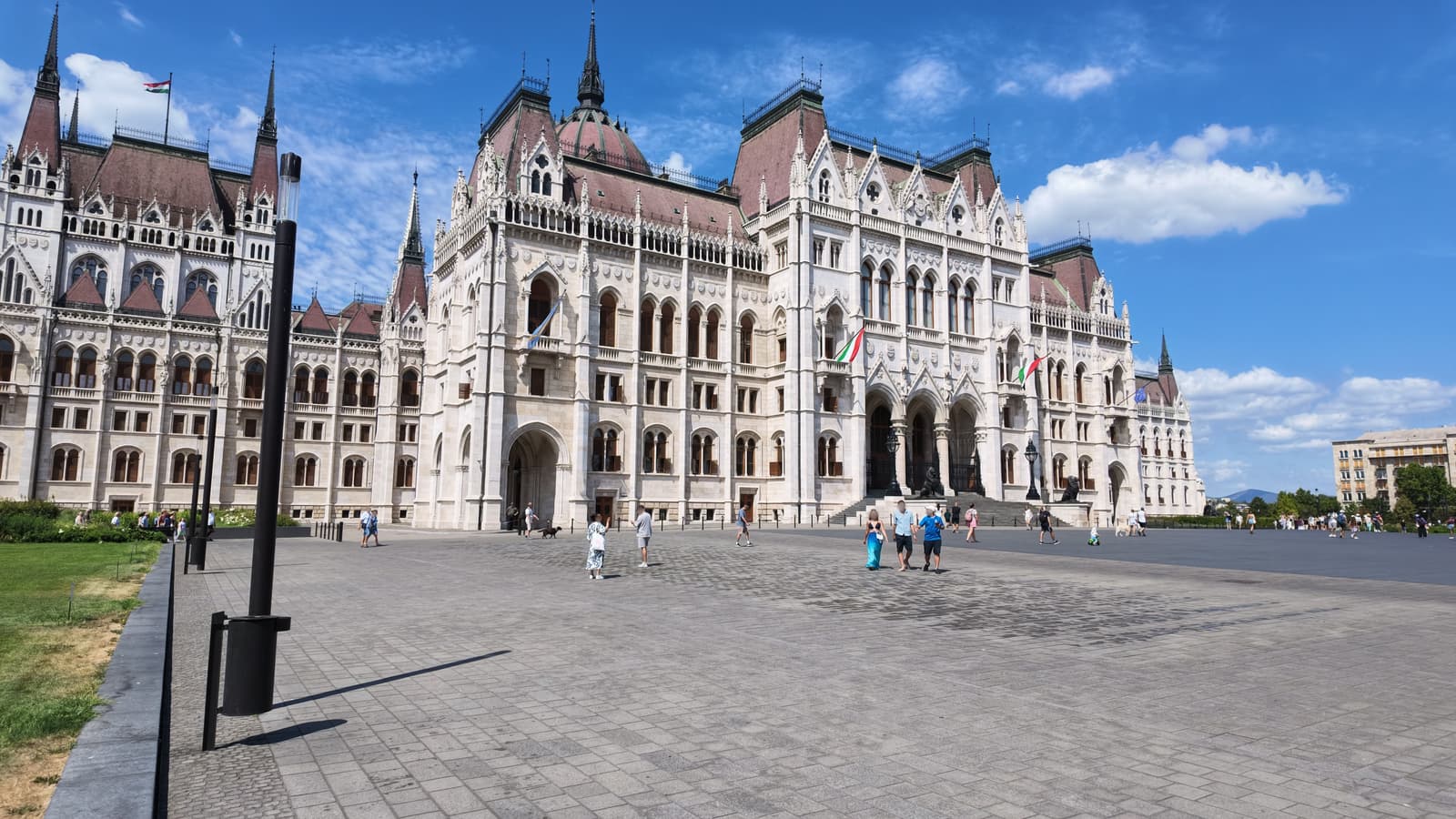
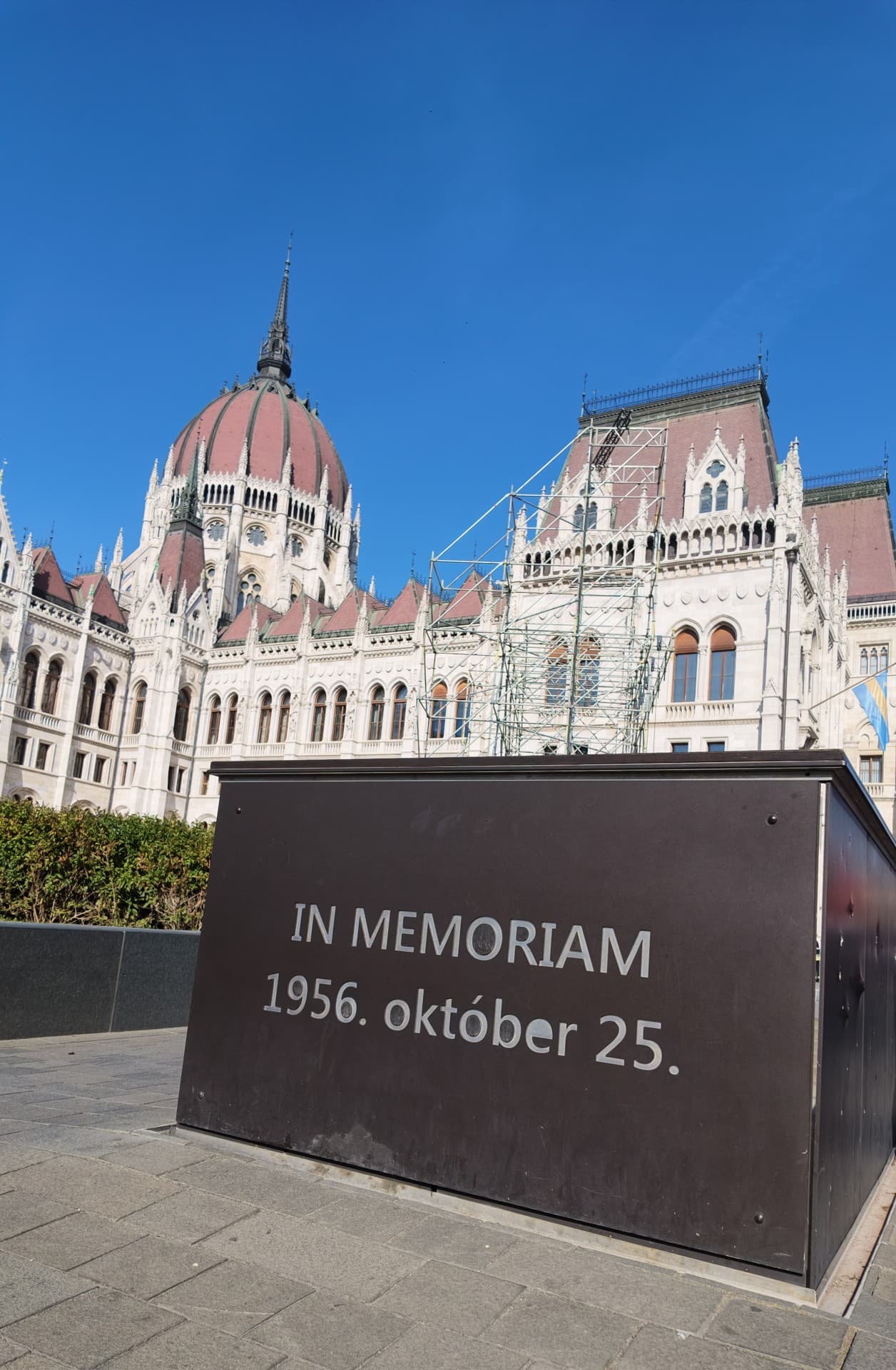
Before you set off, look around the square. The bronze man on the little footbridge is Imre Nagy, prime minister during the 1956 revolution. The statue stood near the Parliament from 1996 and was moved here at the end of 2018. Upstream, the Palatinus houses line the river, and a small brass stone set in the pavement at Pozsonyi út 1 remembers a poet who lived in this district. Then walk south: the large pale riverside block at Széchenyi rakpart 19, the "White House", was the communist party's headquarters from 1961. Today it holds offices for members of Parliament.