© Wanderyarn
Terror Háza (House of Terror)
Venture to Andrássy út 60 in the vibrant heart of Budapest, where a beautiful neo-renaissance palace conceals a profoundly somber past. Once the sinister headquarters of the Arrow Cross, then later the feared ÁVO/ÁVH communist secret police, these walls witnessed unimaginable suffering and oppression. Step inside and feel the palpable weight of history, as the museum, opened in 2002, meticulously preserves the memories of those who endured tyranny. The sheer resonance of this place is underscored by its opening day: a staggering 100,000 people flooded through its doors, with the last group admitted as late as 2 AM – a powerful testament to the nation's need for remembrance.
The Dark History of Andrássy út 60
Mid-20th Century
Andrássy út 60 served as the headquarters for Hungary's fascist Arrow Cross Party from 1937. After the Arrow Cross seized power on October 15, 1944, the building became a notorious site of terror, torture, and executions. This grim tradition of state-sponsored violence continued after 1945 when new security forces moved in. In 1946, the State Protection Department (ÁVO) was formed, later renamed the State Protection Authority (ÁVH) in 1949. The ÁVO/ÁVH, acting as the "Party's fist" under communist control, broadened its focus to target "class enemies" or "enemies of the people." Andrássy út 60 became the central hub for this state terror, directing extensive spy networks. Thousands were brought there for interrogation, often tortured, and thousands of "enemies" were held captive within its walls.
Sources: Budapest 1956
The ÁVH's Shifting Headquarters and the House of Terror
Post-WWII to Present
The ÁVH was a brutal state security organization in post-WWII Hungary, led by Péter Gábor, who ruthlessly executed the orders of Stalinist leader Rákosi Mátyás, operating internment and labor camps. Andrássy út 60 was the site where many of these atrocities were committed. However, after Péter Gábor's arrest in early 1953 and a political thaw under Imre Nagy's first premiership, the ÁVH's internment and labor camps were dissolved. Crucially, the ÁVH was placed under the Ministry of Interior and moved from Andrássy út 60 to the Ministry's building on Jászai Mari tér. This relocation explains why Andrássy út 60 largely escaped intense focus during the 1956 Revolution, despite deep public hatred for state security forces. While a minor demonstration did occur there on October 6, 1956, it was not a primary target. The ÁVH's dissolution was a key demand of the uprising, announced by Imre Nagy, and formally ordered by the post-revolution Kádár government, though many members reportedly transitioned into new police and security roles. Today, Andrássy út 60 stands as "The House of Terror" museum, opened in 1998, specifically commemorating the atrocities committed by both the Arrow Cross and the ÁVO/ÁVH, with a primary focus on the latter.
Sources: Budapest 1956
Andrássy út 60: A Symbol of Continuous Terror
1937-1956 and beyond
The building at Andrássy út 60 has a dark history of continuous political terror, making it a profound symbol of fear. Its grim legacy began in 1937 when it became a building, then the center, of Hungary's fascist Arrow Cross Party. When the Arrow Cross seized power in a coup on October 15, 1944, Andrássy út 60 transformed into a site of terror, torture, and executions. This "tradition" of state-sponsored violence persisted after 1945. New security forces moved in, and in 1946, the State Protection Department (ÁVO) was officially formed. This organization broadened its focus, targeting "class enemies" or "enemies of the people." Andrássy út 60 became the central hub of this state terror network, directing its spy network and bringing thousands for interrogation, often subjecting them to torture. From 1949, the ÁVO was renamed the State Protection Authority (ÁVH), though the earlier acronym remained in common use until 1956 and beyond. Operating directly under the Party's control as its "fist," this political police force held thousands of perceived "enemies." The building became a dreaded symbol, embodying pervasive state terror.
Sources: Budapest 1956
Step into the chilling heart of 20th-century tyranny in Budapest and witness history's raw truth.
What to Look For
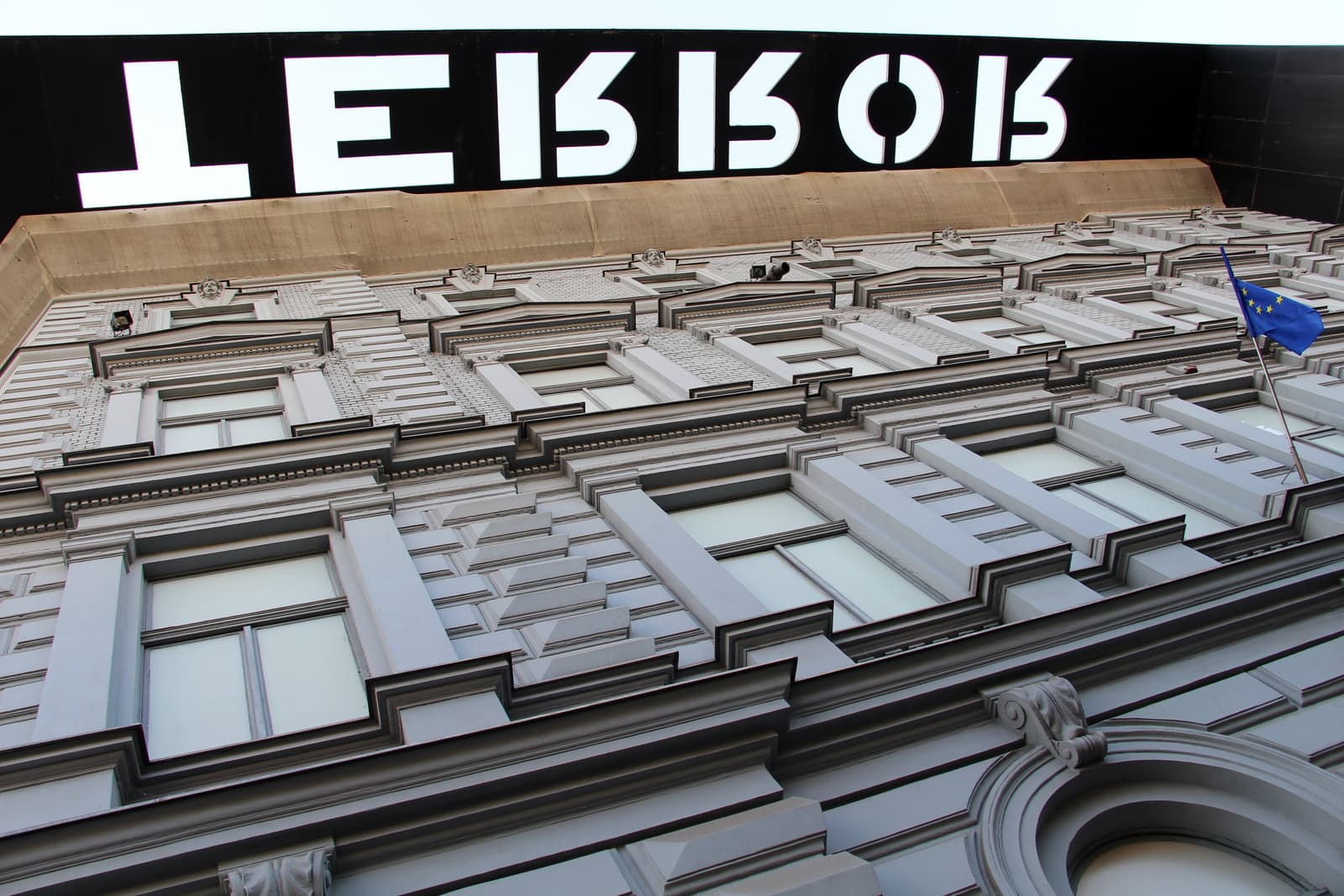
- The distinctive, imposing facade with its 'Terror' sign casting shadows.
- The Tank Room in the basement, a powerful and symbolic exhibit.
- The 'Wall of Tears' featuring photos of victims of the regimes.
- The preserved original cells and interrogation rooms in the basement.
💡 Insider Tip
This museum is emotionally intense; allow ample time for reflection. Photography is often restricted inside, so focus on absorbing the exhibits. Consider visiting during off-peak hours for a more personal experience.
Photos