© Fortepan · CC BY-SA
Budapest
Vígszínház
Uncover Budapest's dramatic heart: a century of grandeur and captivating performances await.
The storyswipe · 4 cards
Vígszínház, opened in 1898, is one of Budapest's most cherished theatres, a magnificent cultural beacon on the site of the former 'Új Világ' entertainment venue. It has played a pivotal role in shaping the XIII. district's cultural identity, offering captivating drama and timeless elegance through its grand architecture, elegant interiors, and vibrant live performances.
Why it was built
A theatre on an empty boulevard
The company formed to build a new comedy theatre bought this plot in the last days of 1894, almost in despair: a two-day debate in Parliament and many city council sessions had shown that the state would not give money and the city would not give free land. They wanted it open for the millennium celebrations at any cost. A newspaper praised their courage, because Lipót körút was then nearly empty, a stretch of single-storey shacks, timber yards, fenced lots and little stalls selling pálinka, with two steam mills for company. In April 1896 the Pesti Napló wrote that the new theatre palace had been built among dives and timber yards.
How it was built
1,850 seats, electric light, Viennese architects
The theatre opened on 1 May 1896 with a comedy Mór Jókai wrote for the occasion. Ferdinand Fellner and Hermann Helmer, the theatre builders of the Monarchy, designed it in a Baroque manner as the largest auditorium in the capital: 1,850 people could laugh and cry together in a white-and-gold hall lit by electricity, warmed by central heating and aired by a large ventilator. Count István Keglevich, former intendant of the National Theatre and the Opera, led the founders, and hired Mór Ditrói from Kolozsvár as director. Not everyone was pleased: the Építészeti Szemle protested that Viennese builders, not a Hungarian architect, had been given the job.
Big moments
A bomb, a rebuild and a battle that never happened
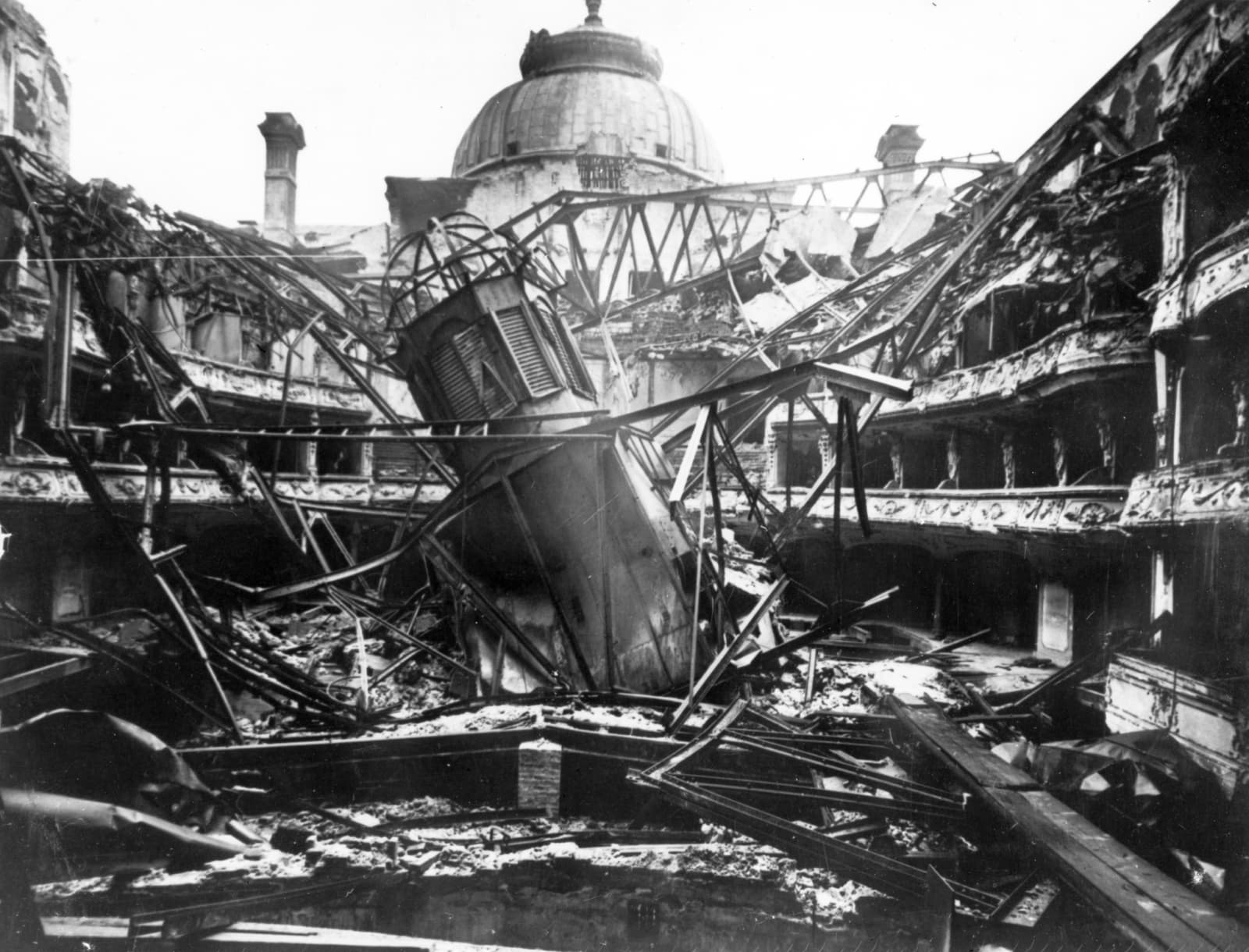
In 1945 a bomb hit the middle of the building and destroyed the auditorium. Neither the post-war rebuild, when it became the theatre of the People's Army, nor the large reconstruction of 1993–94 brought back its original look; the second one modernised the interior and added a floor. One thing was deliberately not put back: a plaque that from 1955 had commemorated the 'Battle of the Vígszínház', in which Soviet liberators and Hungarian resistance fighters supposedly fought around the theatre. The public knew the story from Béla Illés's novel of 1950, and wreaths were laid at the plaque, until it turned out that the writer had invented the battle, just as he had invented Captain Guszev, who also got a street named after him.
Did you knowFREE
The café that borrowed the name
In 1896 a large corner house went up near Nyugati, and the owner gave one shop to a young relative to open a café. Károly Brück had the name of the theatre, opened barely six months earlier, painted on the sign, since his was the nearest café to it. Next door to the theatre, the architect Alfréd Wellisch built his own apartment palace with a café on the corner; before the First World War the Vígszínház's regulars sat there, among them Ferenc Molnár, Sándor Bródy and the actors of the company.
People heretap for more
What do you want here?
- Free to see from outside, and you can go inside
- Book tickets
All hours & prices
Visit
Performances
See a performance; tickets and dates on the theatre's site.
Official websiteChecked Oct 10, 2026
Our pickPizza restaurant
Neapolitan-style pizza on Szent István körút, one of the most-reviewed restaurants in the city.
3 min walk€€
Also good here
- Tökmag Vegan Street FoodRestaurant · 5 min walk
- Budapest Jazz ClubBar · 5 min walk
More nearby
- Rin RestaurantRestaurant · 1 min walk
- Zincenco Kitchen (Fine dining - Lakásétterem, Apartment restaurant)Restaurant · 2 min walk
- Gelateria VittorioIce cream · 3 min walk