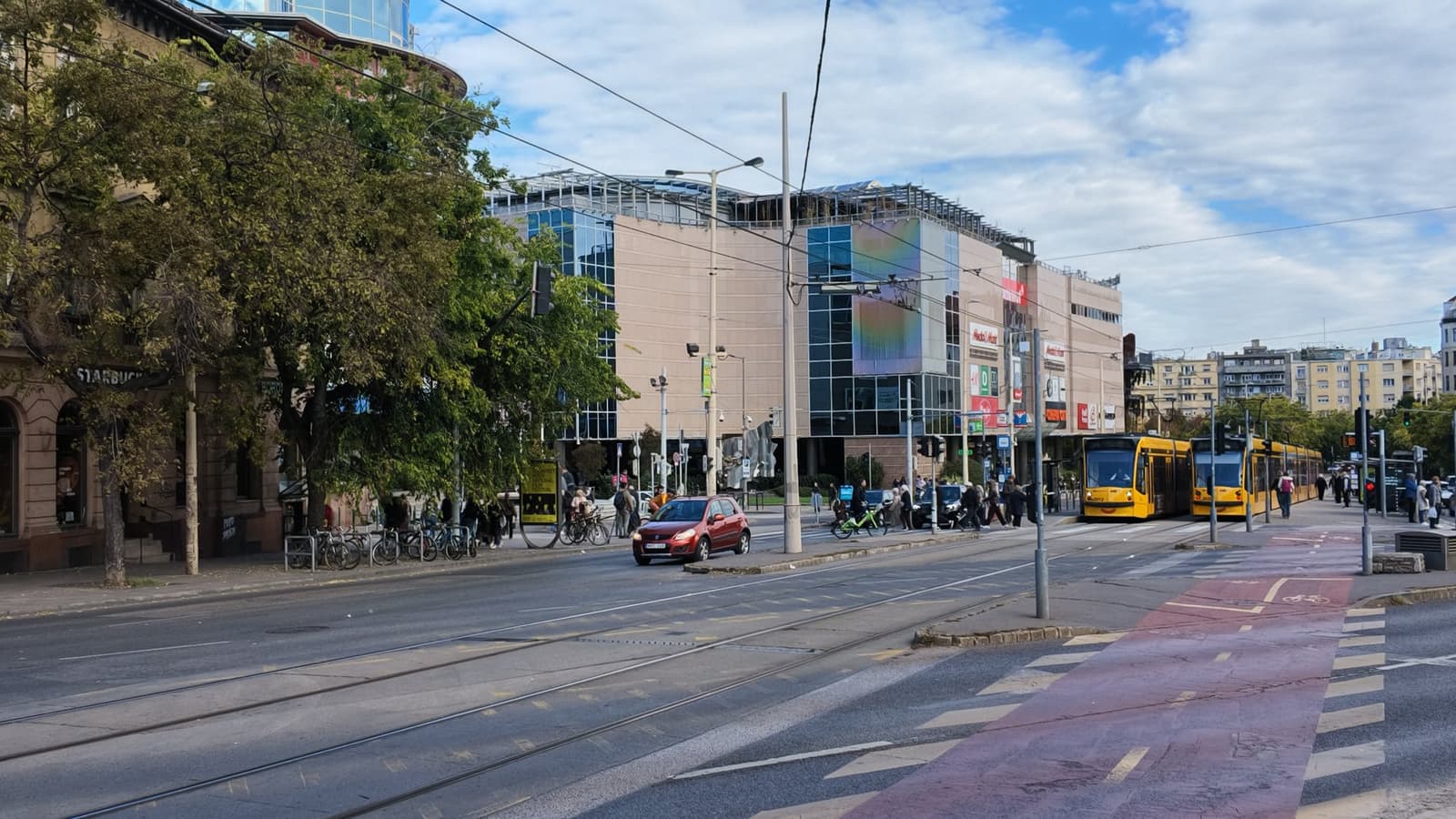
NagykörĂșt: The Grand Boulevard

Moderate2h 30m12 stops

Walk the full arc of Budapest's Grand Boulevard — from Margaret Bridge to PetƑfi Bridge. Five sections, five personalities: theaters, markets, cafĂ©s, and the pulse of everyday Pest life since 1896.

Tram 4/6 runs along the whole boulevard; hop on between any two stops.
Start Scavenger Hunt

NagykörĂșt: The Grand Boulevard Scavenger Hunt — solve riddles as you explore!

Route Map

Loading map


Points of Interest

  1. Photo of Jåszai Mari tér

    © Wanderyarns

    NagykörĂșt: The Grand Boulevard · Stop 1

    Jåszai Mari tér

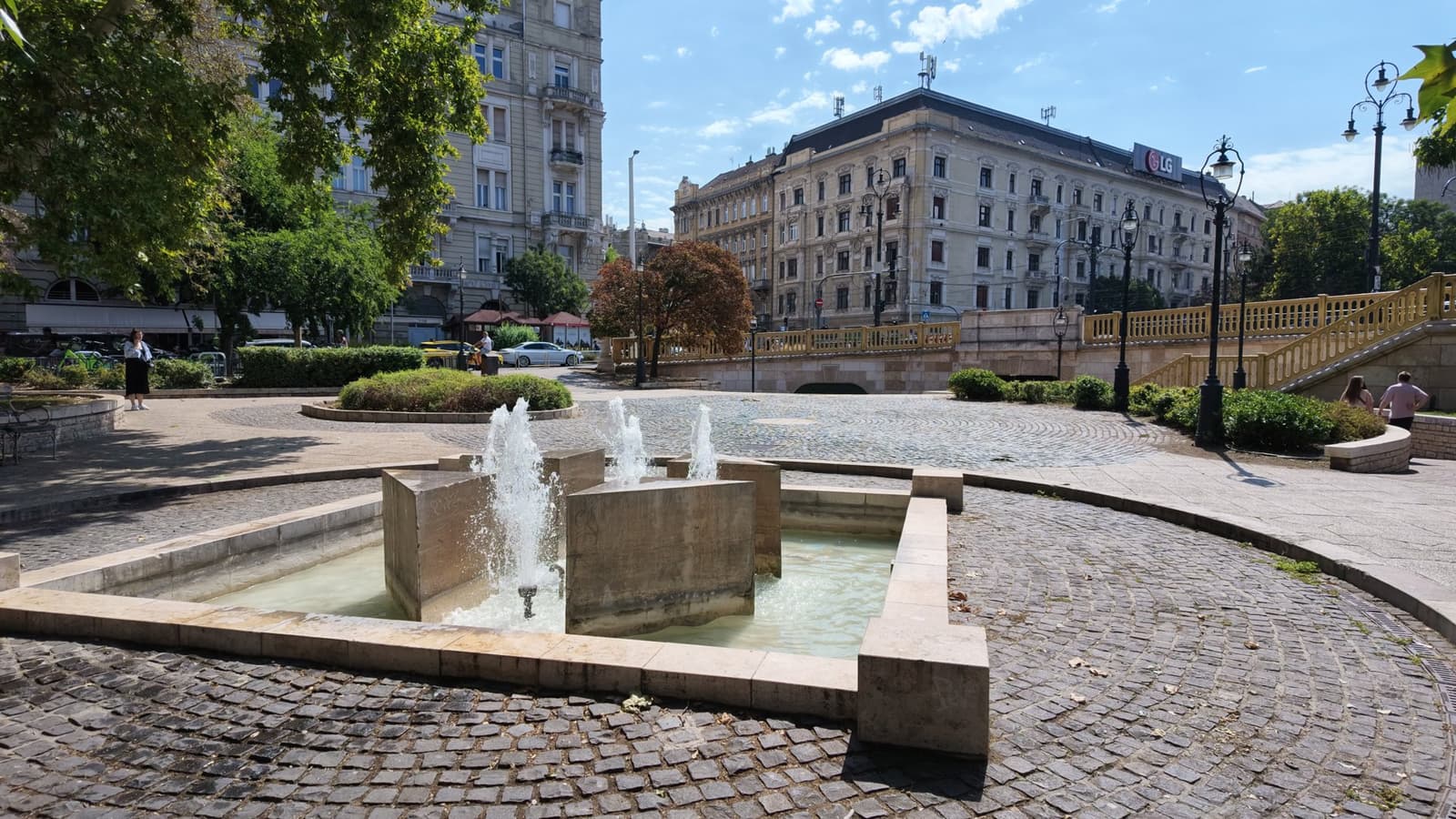
    Tram 2's northern end: the Pest foot of Margaret Bridge, where Újlipótváros begins.

    The story

    Two tree-lined squares on either side of the Pest end of Margaret Bridge, where Lipótváros meets Újlipótváros. The square is named after the actress Mari Jászai (1850–1926), who lived in the Palatinus Houses opposite from 1914 until her death. Trams 2, 4 and 6 stop here.

    Did you knowFREE

    The actress and the poet

    The square is named after the actress Mari Jászai (1850–1926), who lived in the Palatinus Houses on the embankment (built 1911–12 to Emil Vidor's design) from 1914 until her death.

    Words at this stop

    Carl Lutz

    Carl Lutz (1895–1975), the Swiss vice-consul in Budapest, saved tens of thousands of Jews in 1944 with protective letters and protected houses.

    Background

    Raoul Wallenberg

    Raoul Wallenberg (born 1912), a Swedish diplomat, saved thousands of Budapest Jews in 1944 with protective passports; the Soviets detained him in 1945 and he never returned.

    Background

    Also here

    • FehĂ©r HĂĄz (OrszĂĄggyƱlĂ©s IrodahĂĄza)

      Built in 1913–14 as flats, burnt out in the siege, stripped into a plain office block in 1949; later the Communist Party's headquarters, the 'White House'.

    • Photo of Margit hĂ­d (Margaret Bridge)© Wanderyarns
      Margit hĂ­d (Margaret Bridge)

      The bridge bends in the middle so that each half meets its branch of the river straight on; opened in 1876.

    What do you want here?

    • Free to see from outside

    Next stop · 2 of 12

    Palatinus Houses (Pozsonyi Ășt)

    370 m · about 5 min on foot

    On the way to Palatinus Houses (Pozsonyi Ășt)

    Újlipótváros, built in twenty years

    You are entering ÚjlipĂłtvĂĄros. Until the 1920s this was an industrial area; almost all the apartment blocks you see were built between 1927 and 1944, under strict rules that gave the district the densest group of modernist housing in Budapest — often called "Bauhaus", though the Bauhaus architects themselves found it too dense. A short detour to the river leads to Szent IstvĂĄn park, lined with the most admired blocks, such as the Dunapark house (1935–36) with its cafĂ©. In the park stands a memorial to Raoul Wallenberg, the Swedish diplomat who protected thousands of Budapest Jews in 1944, many of them in buildings of this district.

  2. Photo of Palatinus Houses (Pozsonyi Ășt)

    © Wanderyarns

    NagykörĂșt: The Grand Boulevard · Stop 2

    Palatinus Houses (Pozsonyi Ășt)

    Uncover a secret slice of Budapest's opulent past at the magnificent Palatinus Houses.

    • 5 min from stop 1

    The story

    The Palatinus Houses, built 1911-1913, were once a pinnacle of luxury housing in Budapest, featuring unique amenities like thermal water directly in apartments. Located off the usual tourist path in the XIII district, they offer a glimpse into the opulent lifestyle of a bygone era, preserving the architectural memory of a forgotten golden age.

    Craving a glimpse into Budapest's opulent past, away from the usual tourist trails? Then seek out the magnificent Palatinus Houses on Pozsonyi Ășt, truly one of Budapest's hidden gems. Erected between 1911 and 1913 by the Monarchy's largest construction company, these grand buildings once epitomized luxury. Imagine residents drawing steaming thermal water directly from their taps, sourced from the famed Margaret Island – a lavish indulgence that speaks volumes about the era's sophistication. While the graceful corner towers and the elegant French courtyard that originally overlooked the majestic Danube have since vanished, their memory lingers in the architectural details that remain. It's a poignant reminder of a grandeur that once was.

    For travelers eager to uncover secret spots Budapest holds, or to journey off the beaten path Budapest in the charming XIII district, the Palatinus Houses offer a unique window into a forgotten golden age. Discover this piece of hidden Budapest and let your imagination wander through its storied past.

    What do you want here?

    • Free to see from outside

    Next stop · 3 of 12

    VĂ­gszĂ­nhĂĄz

    260 m · about 4 min on foot

    On the way to VĂ­gszĂ­nhĂĄz

    The Venice of Pest that was never dug

    Turn into Szent IstvĂĄn körĂșt — the first section of the Grand Boulevard,. In the Middle Ages a side branch of the Danube ran here. It silted up into a foul ditch used as a sewer, and in 1865 planners proposed digging it out as a 36 m wide navigable canal — a "Venice of Pest". The cost killed the idea; the boulevard was built instead, for roughly a tenth of the canal's price.

  3. Photo of VĂ­gszĂ­nhĂĄz

    © Fortepan · CC BY-SA

    NagykörĂșt: The Grand Boulevard · Stop 3

    VĂ­gszĂ­nhĂĄz

    Uncover Budapest's dramatic heart: a century of grandeur and captivating performances await.

    • 4 min from stop 2

    The storyswipe · 4 cards

    Vígszínház, opened in 1898, is one of Budapest's most cherished theatres, a magnificent cultural beacon on the site of the former 'Új Világ' entertainment venue. It has played a pivotal role in shaping the XIII. district's cultural identity, offering captivating drama and timeless elegance through its grand architecture, elegant interiors, and vibrant live performances.

    Why it was built

    A theatre on an empty boulevard

    The company formed to build a new comedy theatre bought this plot in the last days of 1894, almost in despair: a two-day debate in Parliament and many city council sessions had shown that the state would not give money and the city would not give free land. They wanted it open for the millennium celebrations at any cost. A newspaper praised their courage, because LipĂłt körĂșt was then nearly empty, a stretch of single-storey shacks, timber yards, fenced lots and little stalls selling pĂĄlinka, with two steam mills for company. In April 1896 the Pesti NaplĂł wrote that the new theatre palace had been built among dives and timber yards.

    How it was built

    1,850 seats, electric light, Viennese architects

    The theatre opened on 1 May 1896 with a comedy MĂłr JĂłkai wrote for the occasion. Ferdinand Fellner and Hermann Helmer, the theatre builders of the Monarchy, designed it in a Baroque manner as the largest auditorium in the capital: 1,850 people could laugh and cry together in a white-and-gold hall lit by electricity, warmed by central heating and aired by a large ventilator. Count IstvĂĄn Keglevich, former intendant of the National Theatre and the Opera, led the founders, and hired MĂłr DitrĂłi from KolozsvĂĄr as director. Not everyone was pleased: the ÉpĂ­tĂ©szeti Szemle protested that Viennese builders, not a Hungarian architect, had been given the job.

    Big moments

    A bomb, a rebuild and a battle that never happened

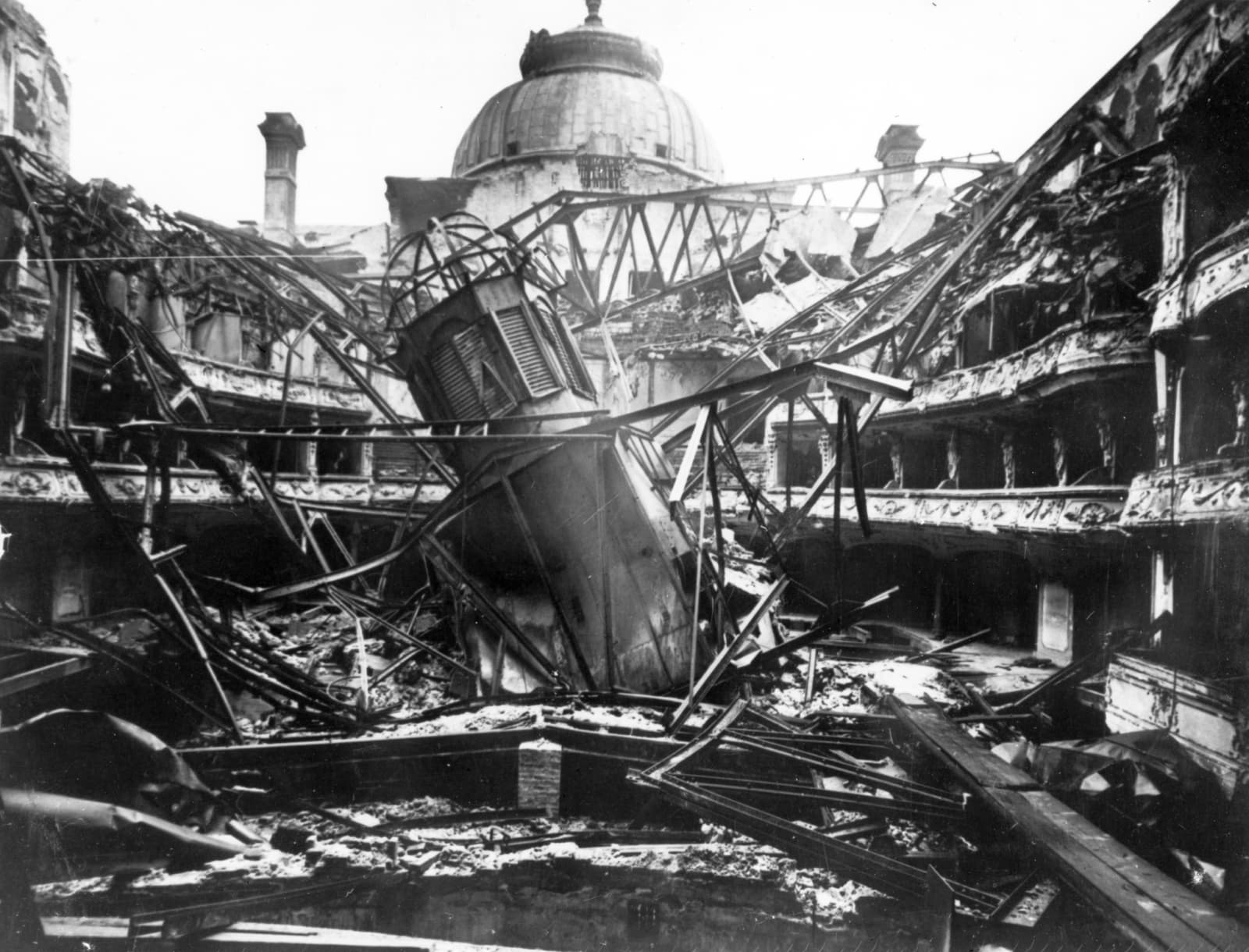
    In 1945 a bomb hit the middle of the building and destroyed the auditorium. Neither the post-war rebuild, when it became the theatre of the People's Army, nor the large reconstruction of 1993–94 brought back its original look; the second one modernised the interior and added a floor. One thing was deliberately not put back: a plaque that from 1955 had commemorated the 'Battle of the VĂ­gszĂ­nhĂĄz', in which Soviet liberators and Hungarian resistance fighters supposedly fought around the theatre. The public knew the story from BĂ©la IllĂ©s's novel of 1950, and wreaths were laid at the plaque, until it turned out that the writer had invented the battle, just as he had invented Captain Guszev, who also got a street named after him.

    Did you knowFREE

    The café that borrowed the name

    In 1896 a large corner house went up near Nyugati, and the owner gave one shop to a young relative to open a cafĂ©. KĂĄroly BrĂŒck had the name of the theatre, opened barely six months earlier, painted on the sign, since his was the nearest cafĂ© to it. Next door to the theatre, the architect AlfrĂ©d Wellisch built his own apartment palace with a cafĂ© on the corner; before the First World War the VĂ­gszĂ­nhĂĄz's regulars sat there, among them Ferenc MolnĂĄr, SĂĄndor BrĂłdy and the actors of the company.

    People heretap for more

    What do you want here?

    All hours & prices
    • Visit

      Performances

      See a performance; tickets and dates on the theatre's site.

      Official websiteChecked Oct 10, 2026
  4. 9 more stops · unlock the tour €4.99

    The full story, the insider tip, the people and the riddle come with the tour.

Stop 1 of 12