© Wanderyarns
Dohány utcai zsinagóga (Great Synagogue)
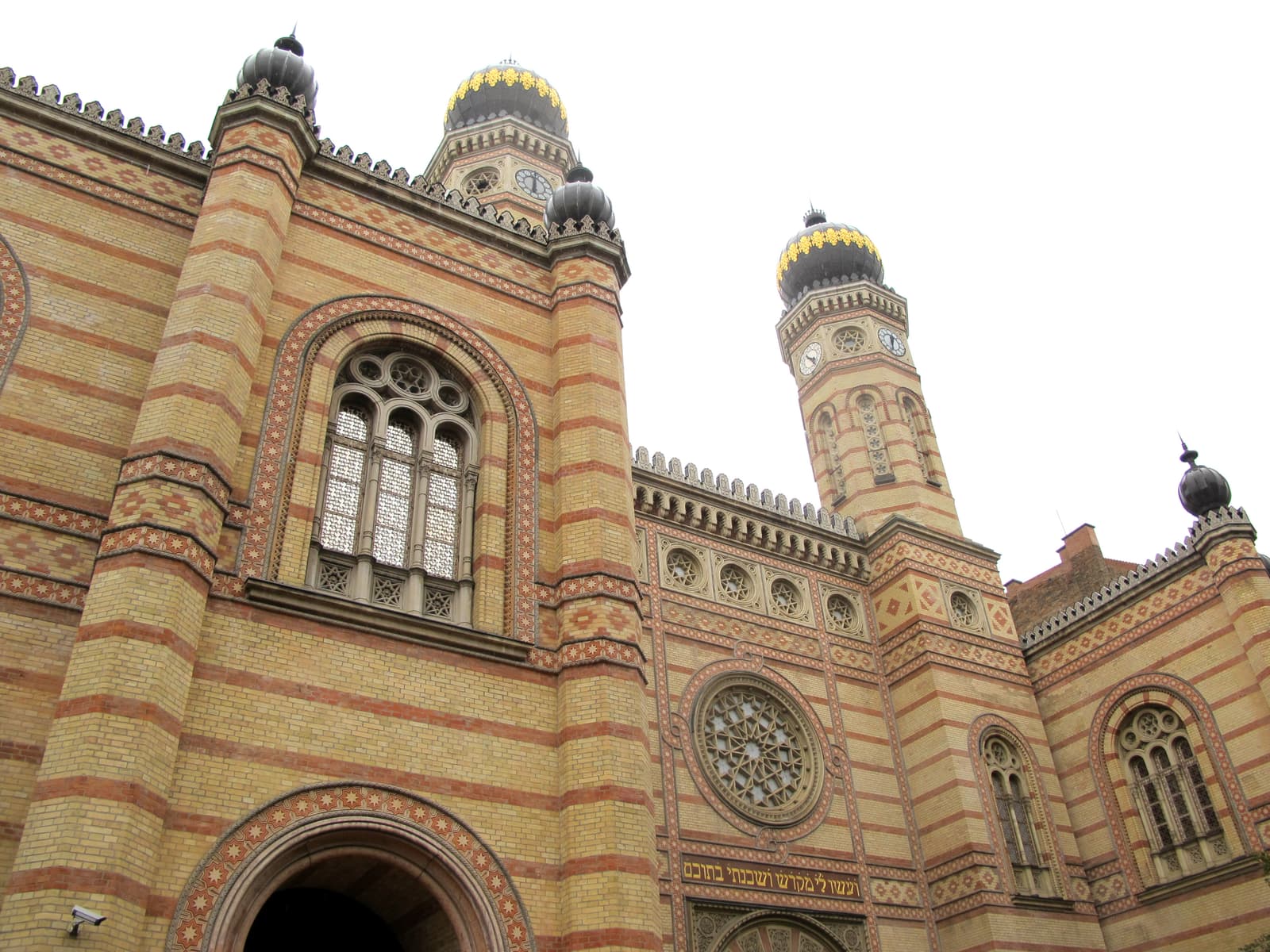
Beyond its sheer scale, this synagogue holds a fascinating secret: its two soaring towers and impressive organ deliberately echo the aesthetics of a Catholic church. Prepare to be awestruck by its beauty and the resonant echoes of history within its hallowed walls.
The Dohány Street Synagogue: A Symbol of Equality and Integration
mid-19th century
The Dohány Street Synagogue, completed in 1859, was built with a grand, church-like appearance as a direct consequence of significant social and ideological shifts within the Hungarian Jewish community. In the second half of the 19th century, Hungarian Jews achieved civil rights, gaining recognition for their religion as equal to others. This newfound equality fostered a desire among many to modernize their religious practices and integrate into Hungarian society, leading to the rise of the Neolog movement, which became the majority. The Neolog community commissioned the synagogue, designing it with a large central door, two towers, and an organ, deliberately mirroring the grand architectural styles of Catholic churches. This choice was a powerful statement, representing the Neolog community's aspiration for full equality and integration within Hungarian society, physically manifesting their newly acquired civil rights and the recognition of their religion as equal.
Sources: Nagy Budapesti Kerülethatározó (I.) (2025)
A Child's Perspective: Budapest 1956 Revolution
October 1956 - January 1957
When the 1956 Revolution began on October 24th, a 12-year-old resident near Budapest's Grand Boulevard initially mistook the unfamiliar gunfire for an earthquake, leading to school cancellation until January 1957. As fighting intensified, residents frequently sought safety in cellars, with neighbors assisting those like the grandmother who couldn't move quickly. The situation dramatically escalated on November 4th when the radio announced the Soviet return, prompting everyone to gather essentials and retreat to cellars for seven to ten days. Parents prepared children with escape backpacks, while neighborhood men bravely broke through cellar walls to create escape routes. A local baker on Dohány Street continuously supplied bread, which men retrieved through a Kertész Street cellar exit during lulls in shooting. Residents built a cobblestone barricade on the Grand Boulevard, which drew heavy shelling, and collectively refused soldiers' attempts to set up a machine gun nest in their attic to protect their home. The fierce fighting claimed a young soldier's life at the New York Palace. After the battles, the neighborhood was devastated, with debris piled high and New York Palace columns scattered. The immediate aftermath also brought the painful reality of emigration, as older neighbor boys announced they were leaving the country.
Sources: Nagykörút
The Ancient History and Layout of the Dohány Street Area
Ancient to Medieval period
The area around Dohány Street has a history rooted in the ancient settlement of Újbécs, inhabited by "pogány" böszörmények before the Tatar invasion. On the eve of the invasion, Újbécs was physically divided by a trench, with Werner's palace inside and the cemetery and much of the border outside. After the Tatar invasion, the böszörmények did not return, leaving the land uninhabited. A king subsequently granted this land to the Margit Island nuns, an act that angered the citizens of Pest as the nuns gained possession of land inside the trench, including Werner's palace. This led to a prolonged lawsuit, which concluded with a settlement before the master of the treasury. As a result, the citizens of Pest received the southern half of Újbécs, extending up to the line of the trench, which corresponds to what is now Deák Ferenc utca. The layout of the area, including the line of Dohány Street, was defined by the borders established after this settlement. This border began at the Danube, next to Werner's palace, followed the great trench, and proceeded eastward to a mound where pagan graves were located. It then traversed cultivated fields, meadows, and a sand hill, reaching a point between two significant ancient roads, one of which followed the line of what is now Dohány utca. The enduring nature of these routes is highlighted by a later century map still depicting these roads.
Sources: Pest-Buda kialakulása (1997)
What to Look For
- The striking Moorish Revival façade with its intricate patterns and exotic domes.
- The two soaring towers and the impressive organ, noting their subtle resemblance to church architecture.
- The sheer scale and grandeur inside, recognizing its status as the world's second-largest synagogue.
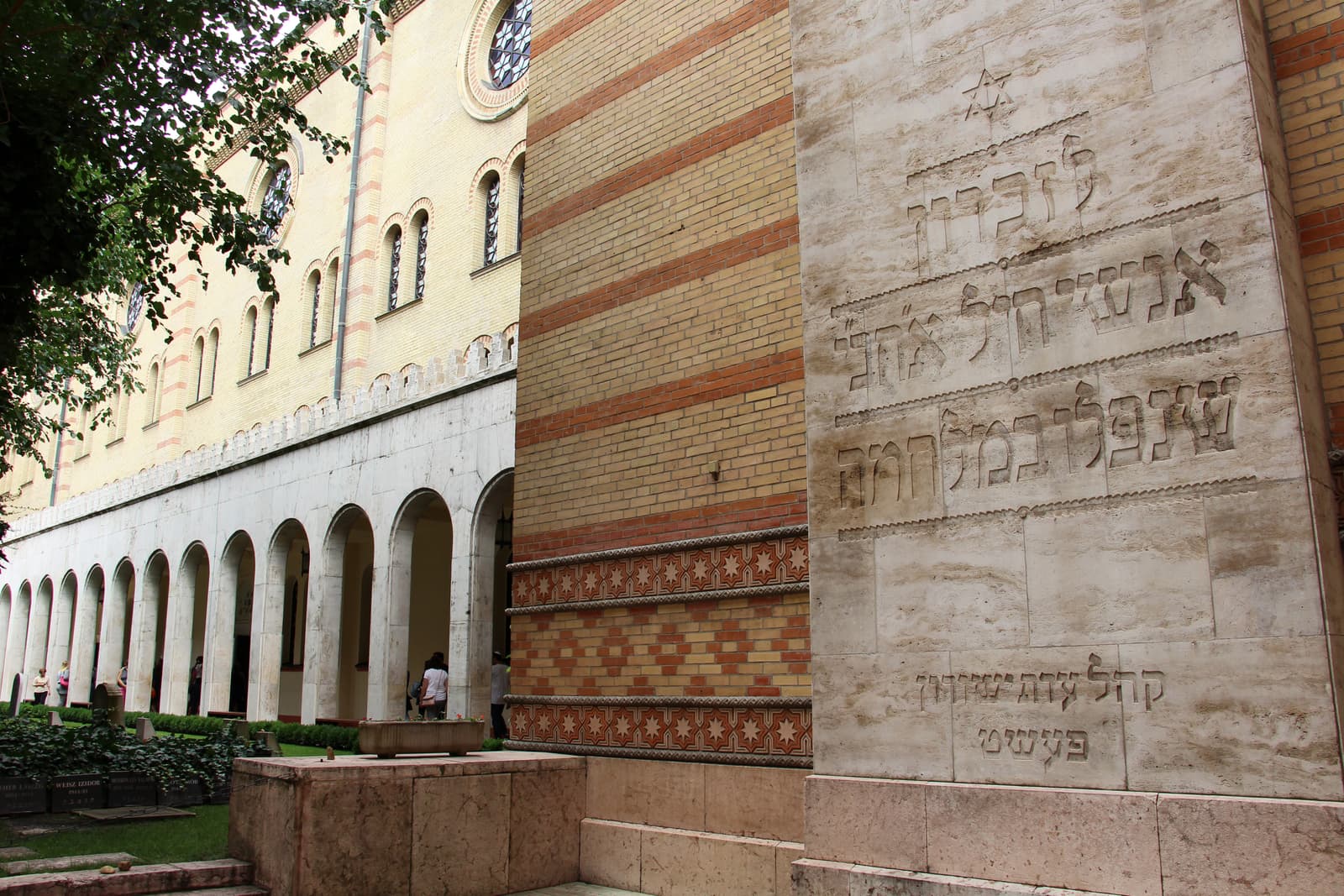
- Details within the historic Jewish Quarter surrounding the synagogue, indicating its central role.
💡 Insider Tip
Visit during off-peak hours (early morning or late afternoon) to fully appreciate its grandeur without the crowds, and consider a guided tour to uncover the hidden historical significance of its unique design choices.
Photos