© Wanderyarns
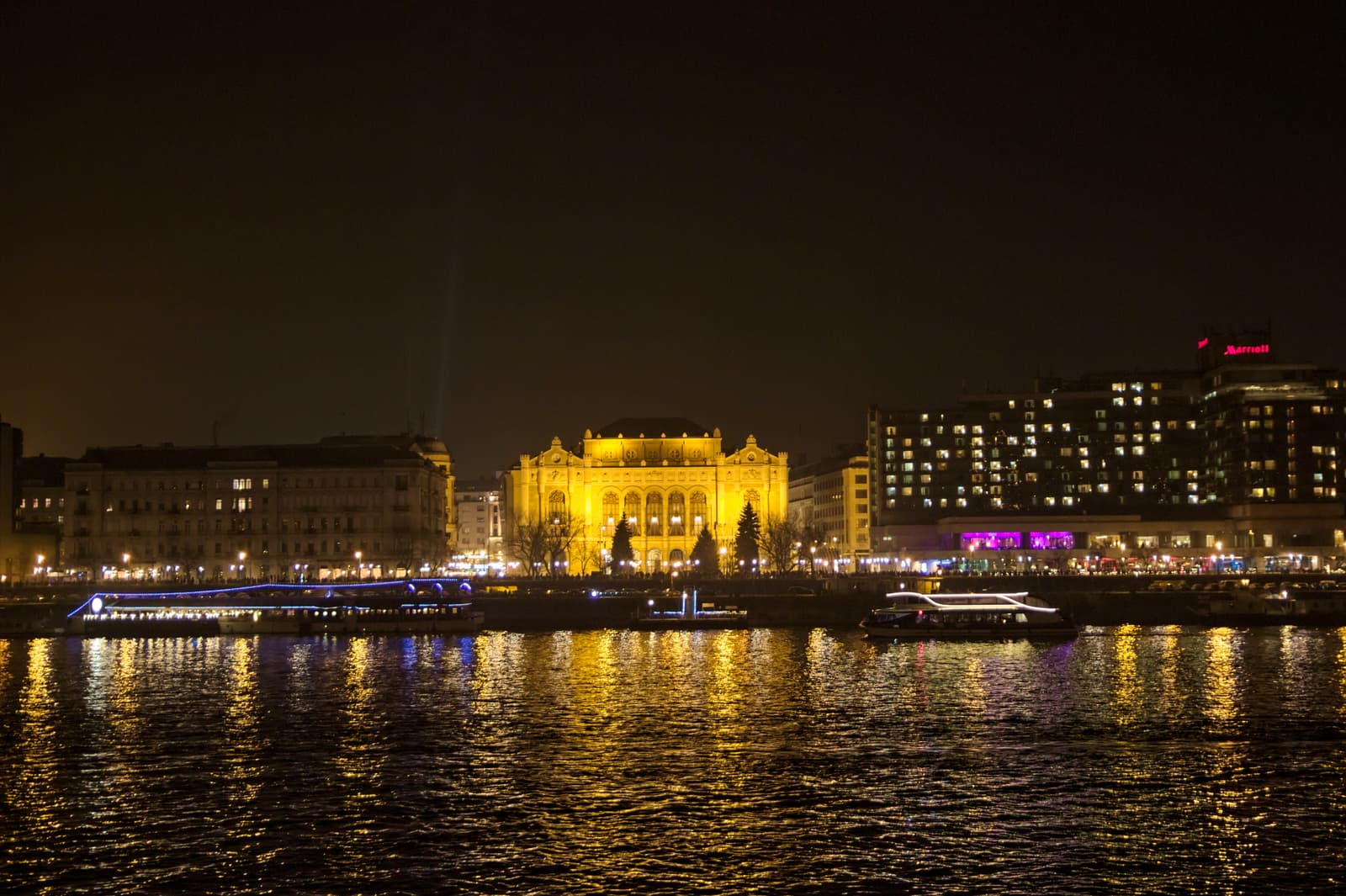
Pesti Vigadó
Designed with a visionary spirit by Feszl Frigyes, its distinctive façade was crafted to embody a unique "Hungarian style," a visual symphony that sets it apart from more commonly known landmarks. Before the grand structure you see today, the site housed the elegant Redoute, a vibrant hub of Pest society. Imagine the rustle of gowns and the laughter echoing through its halls during the very first ball in 1833. It also bore witness to profound moments, like the moving charity concert by the legendary Liszt Ferenc, performed to aid victims of the devastating 1838 flood – a testament to Budapest's enduring spirit. Tragically, this cultural heart was scarred, destroyed by Austrian cannon fire in 1849. Yet, like the city itself, Pesti Vigadó rose from the ashes, rebuilt grander and more magnificent than ever. Don't miss this opportunity to connect with the city's soul.
Why is this city called Pest?
10th-12th century
The city of Pest derives its name from the Bulgar-Slavic word "pest," meaning "oven" or "furnace." This word was adopted into Hungarian by the 10th century. While "pest" could refer to a baking oven, it more likely denoted a lime kiln, a rarer and larger structure associated with significant construction, making it a distinctive landmark. Although there was debate about whether this original "oven" was on the Buda or Pest side of the Danube, evidence points to the Pest side. Eleventh-century mentions of "Pest Island" and a church on the left bank, along with the medieval German name "Ofen" (meaning "oven") for the Pest side, support this. The common misconception linking the name to Ismaelite Bulgarians mentioned by Anonymus is unfounded.
Sources: Pest-Buda kialakulása (1997)
The Origin of 'Pest' and its Original Settlement
Medieval
The name 'Pest' originates from the Bulgar-Slavic word "pest," meaning "furnace" or "oven," a meaning also reflected in its medieval German name, Ofen, and French name, Paele. The Slavic word became naturalized in Hungarian early on. "Pest" could refer to a baking oven or a lime kiln, with the latter being a more likely source for a place name due to its rarity, larger area, and association with significant construction. While Buda had resources for a lime kiln, the possibility of one on the Pest side, supporting major building and using ancient ruins for limestone, is not ruled out. Sources from certain centuries referred to settlements on both banks as 'Pest', leading to debate, but evidence supports the Pest (left) side as the original. A Pest Island mentioned in the mid-century was on the left bank with a church, unlike the right. Before the Mongol invasion, Germans called the Pest side Ofen, while the Buda side was Kreinfeld. The Buda side's Hungarian name, Kispest ("Small Pest"), indicates a secondary settlement. After the Mongol invasion, the left-bank city was called Ópest ("Old Pest"), solidifying its status as the primary settlement.
Sources: Pest-Buda kialakulása (1997)
Discover Budapest's architectural soul: Pesti Vigadó, an opulent masterpiece reborn from history.
What to Look For
- The distinctive "Hungarian style" of its exterior facade, unique from other city landmarks.
- The opulent, richly decorated interiors, grand halls, and intricate ceilings.
- Architectural details and plaques that tell the story of its destruction and rebirth.
💡 Insider Tip
To truly appreciate its grandeur and acoustics without the crowds, check for evening concert or event schedules – experiencing a performance here is magical.
Photos