© Wanderyarns
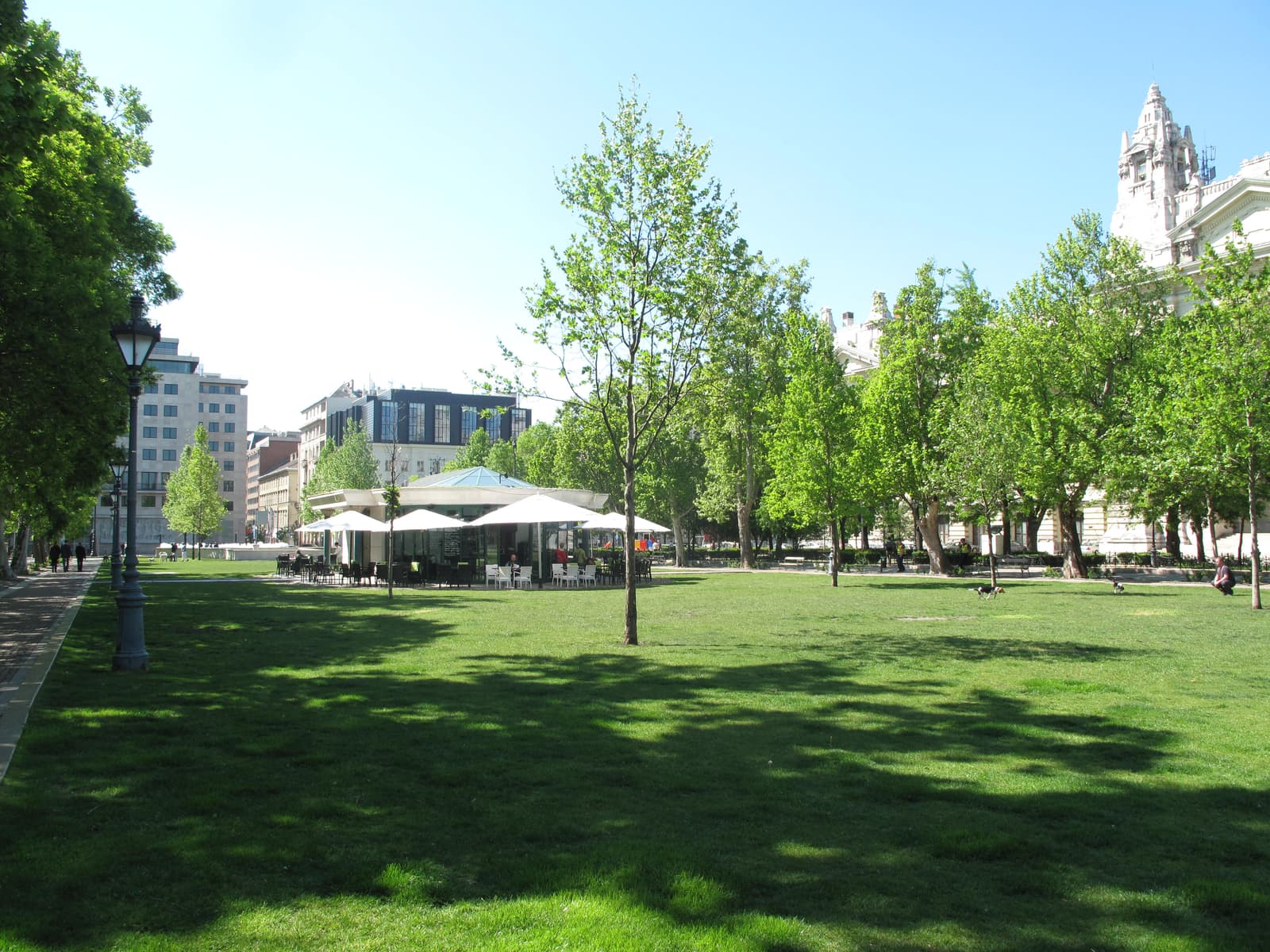
Szabadság tér
Imagine standing on ground that once housed the formidable Újépület military complex, grimly dubbed the "Hungarian Bastille." It was here, amidst the solemn quiet of 1849, that the nation endured a profound tragedy with the execution of its first Prime Minister, Batthyány Lajos. The air still seems to carry echoes of its somber history. Yet, this downtown Budapest square miraculously transformed. From its poignant origins, it rose to become the vibrant financial center of Hungary, a testament to resilience and rebirth.
The Trianon Monuments of Szabadság tér: A Symbol of National Grief and Revisionism
Horthy era (1920s-1930s)
The dramatic Trianon monuments on Szabadság tér, erected in 1921 during the Horthy era, served as a bombastic expression of Hungary's national grief and revisionist aspirations. Instead of analyzing the causes of the national catastrophe, the Horthy regime's propaganda relentlessly maintained a mood of mourning and a fervent hope for a miraculous restoration of lost territories, a process aided by these monuments. Four colossal, twice life-size artificial stone compositions at the square's corners depicted the cardinal directions and corresponding lost lands. North showed a crucified Hungária, East a man in chains for Transylvania, South a Hungarian man protecting a Swabian girl, and West a sorrowful youth embracing the Holy Crown with Hadúr and a Turul bird. These were augmented by a relic flagpole with soil from lost territories and a finial modeled after Governor Horthy's hand, symbolizing a path out of pain. A separate "Hungarian Pain" statue, gifted by Lord Rothermere in 1932, further amplified the theme of national suffering. Ultimately, these monuments served as a deliberate and highly emotional political statement, perpetuating a collective sense of national grief and fostering fervent hope for the return of lost lands.
Sources: Hosszúlépés Budapesten (2021)
A grand square where history's whispers meet urban elegance.
What to Look For
- Memorials or plaques commemorating the execution of Lajos Batthyány.
- The historical significance of the ground where the "Hungarian Bastille" once stood.
- The peaceful atmosphere, offering a break from typical tourist areas.
💡 Insider Tip
Many locals enjoy the quiet park benches for a moment of reflection, often with coffee from nearby cafes, observing the blend of history and daily life unfold.
Photos